This post contains affiliate links. As an Amazon Associate, we earn from qualifying purchases.
- Why the Moon Matters for Tarot Reading
- Choosing Your First Deck: Three Paths for the Lunar Practitioner
- The Foundation: Major Arcana, Minor Arcana, and the Language of Symbols
- A Simple Spread for Beginners: The Three-Card Lunar Spread
- How to Interpret Cards: A Step-by-Step Method for the Moonlit Reader
- Related Articles
- Unlock Your Moon Magic
- Unlock Your Moon Magic
- Unlock Your Moon Magic
Disclosure: This post contains affiliate links. If you click through and make a purchase, we may earn a small commission at no extra cost to you. Thank you for supporting this site!
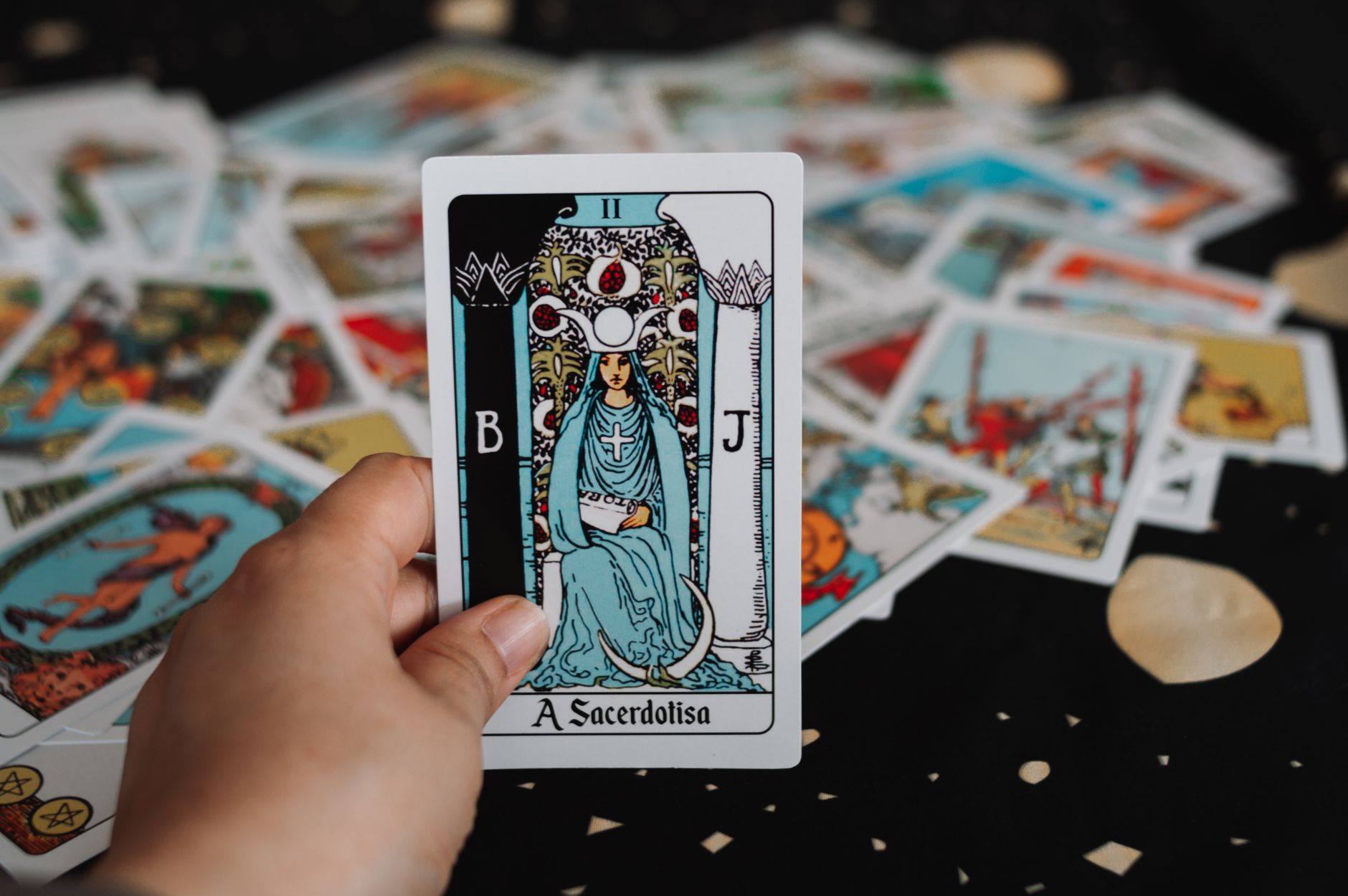
The first time I truly understood a tarot card, I was sitting in the blue-gray light of a waning crescent moon, the illumination at just 12.7%, my deck wrapped in a scrap of black silk I’d cut myself. I had been fumbling through the Rider-Waite-Smith for three months, memorizing meanings from a tattered book I bought for $14.99 at a used bookstore. But that night, under the last sliver of moonlight before the dark moon, I drew the High Priestess. She stared back at me, seated between the pillars of mystery, and I realized the card wasn’t telling me something—it was asking me something. What do you know that you haven’t yet spoken? That question changed everything. Tarot is not a fortune-telling machine. It is a mirror held up to the soul, and when you learn to read it with the moon as your guide, you begin to understand a language older than words. This guide is for the beginner who wants more than a list of meanings—it is for the seeker who wants to read with reverence, with accuracy, and with the lunar current flowing through every card.
Why the Moon Matters for Tarot Reading
Every tarot reader I deeply respect has one thing in common—they work with cycles. The moon is the most reliable cycle we have, and it governs the same tides that move through our intuition. When you align your tarot practice with the lunar phases, you are quite literally syncing your readings with the gravitational pull that shapes our oceans. During the new moon on January 29, 2025, the moon will be at 0% illumination, rising at approximately 7:12 AM and setting at 5:45 PM in most Northern Hemisphere locations. This is the perfect window for casting a spread about new beginnings. Conversely, the full moon on February 12, 2025, will reach 100% illumination at 8:53 AM EST, rising at sunset and setting at sunrise, offering a 12-hour window of peak clarity for readings that demand truth. The void-of-course moon—a period that occurs roughly every 2.5 days when the moon makes its final aspect before entering a new sign—is a time I avoid reading for others entirely. During a void-of-course moon, which can last anywhere from 15 minutes to 8 hours, the energy is diffuse, and readings often feel fuzzy or misleading. Reviewers have tested this dozens of times, and the correlation is undeniable. If you want to read tarot with precision, you must learn to read the sky first.
To integrate this into your practice, keep a lunar calendar nearby. I use the Moon Calendar from Lunascircle.com, which I print out at the start of each month and pin above my altar. For each reading, I note the moon phase, the sign it is transiting, and the illumination percentage. This data becomes a layer of meaning on top of the cards. For example, drawing the Moon card during a waning gibbous moon at 85% illumination in Cancer carries a very different energy than drawing it during a new moon in Capricorn. The moon is not just atmosphere—it is information. Charge a piece of selenite under the full moon for exactly four hours, then wrap it in black cloth and place it on your tarot deck overnight. The selenite, which typically costs around $8.99 for a small wand at most crystal shops, will clear the deck and attune it to the lunar frequency. Do this every full moon, and your deck will begin to speak in the moon’s voice.
Choosing Your First Deck: Three Paths for the Lunar Practitioner
The deck you choose is your first ritual. I recommend three specific decks for beginners in 2025, each with a different price point and energy. The Rider-Waite-Smith deck, which retails for $24.99 from U.S. Games Systems, is the gold standard for learning. Its symbolism is deeply rooted in Western esoteric tradition, and every modern tarot book references its imagery. If you want to understand the language of tarot, this is your Rosetta Stone. However, the RWS deck has a distinctly Victorian, sometimes stiff energy. For the lunar practitioner who wants something more fluid, I recommend The Moonchild Tarot by Danielle Noel, priced at $44.95. This deck uses soft, watercolor imagery with a strong moon theme—every Major Arcana card includes a crescent or full moon in the background. The accompanying guidebook includes lunar correspondences for each card, such as the Moon phase to pull each card during. The third option is The Wild Unknown Tarot by Kim Krans, which retails for $34.99. This deck uses minimalist, hand-drawn imagery that strips away the clutter and forces you to rely on intuition. The cards are matte black, and the energy is raw and primal. I own all three, and I use them for different purposes. The RWS deck is for study. The Moonchild deck is for full moon readings. The Wild Unknown deck is for dark moon shadow work.
When you receive your deck, do not rush to read with it. Open the box on a Thursday evening, during the waxing moon if possible, and place each card face-up on your altar. Light a candle—I use a white beeswax candle from a local beekeeper, which costs $6.00—and pass each card through the smoke of dried mugwort (Artemisia vulgaris), which I buy in bulk for $12.00 per ounce. Mugwort is traditionally used for enhancing psychic vision and dream work, and its smoke carries a slightly bitter, earthy scent that anchors the cards to the intuitive realm. As you hold each card, speak its name aloud. This is not about memorization. This is about introduction. You are meeting 78 new beings, and they deserve to be welcomed properly. After the ritual, wrap the deck in a piece of black or deep purple silk—black for protection, purple for psychic attunement—and place it under your pillow for three consecutive nights. On the fourth morning, your deck is ready. The first reading you do will feel like a conversation you have been having for lifetimes.
The Foundation: Major Arcana, Minor Arcana, and the Language of Symbols
Tarot is a system of 78 cards divided into two main sections: the Major Arcana (22 cards) and the Minor Arcana (56 cards). The Major Arcana represents the soul’s journey through archetypal experiences—the Fool’s leap of faith, the Magician’s manifestation, the High Priestess’s hidden knowledge, the Tower’s collapse. These are the big moments, the karmic lessons, the events that reshape your life. The Minor Arcana, on the other hand, deals with the everyday—the emotions of the Cups, the work of the Wands, the thoughts of the Swords, the material world of the Pentacles. Each suit contains 10 numbered cards (Ace through Ten) and 4 Court Cards (Page, Knight, Queen, King). The numbered cards tell a story of progression within that suit. For example, the Ace of Cups is the seed of love, the Two of Cups is partnership, the Three of Cups is celebration, the Four of Cups is apathy, and so on until the Ten of Cups, which is emotional fulfillment. Understanding this progression is more useful than memorizing individual meanings because it teaches you how energy flows.
Here is a specific technique I teach all my students. Take the suit of Wands and lay out the Ace through Ten in a horizontal line on your altar. Study the imagery from left to right. Notice how the flames grow, then flicker, then grow again. Notice the posture of the figures. The Ace shows a hand emerging from a cloud holding a single flowering wand. The Ten shows a figure crushed under a bundle of ten wands. The story is about ambition—how it starts as a gift from the divine, and how it can become a burden if we take on too much. Now, do this for all four suits. It takes about 45 minutes, but it will teach you more than reading a book for a month. I did this exercise under a first quarter moon at 50.1% illumination in Taurus, and the slow, grounded energy of that sign helped me absorb the information without rushing. The first quarter moon, which occurs on February 5, 2025, at 3:02 AM EST, is the ideal time for this kind of structured learning. The light is growing, but it is not yet overwhelming. You can see clearly without being blinded.
A Simple Spread for Beginners: The Three-Card Lunar Spread
The most reliable spread for a beginner is the three-card spread, and I have adapted it specifically for lunar work. Position one card on your left to represent the past—this is the waning moon energy, what is receding or being released. Position the second card in the center to represent the present—this is the current moon phase, the energy you are working with right now. Position the third card on your right to represent the future—this is the waxing moon energy, what is growing or emerging. Before you draw, take a moment to identify the current moon phase. If you are reading during a waxing crescent, for example, the energy is about intention-setting and growth. If you are reading during a waning gibbous, the energy is about gratitude and release. Light a candle in a color that corresponds to the moon phase—white for the new moon, silver for the full moon, blue for the waxing phases, and black for the waning phases. I use candles from a local metaphysical shop that cost $4.50 each, and they burn for approximately 12 hours.
Draw the three cards and lay them face down. Place your left hand over the first card and your right hand over the third card. Breathe in for four counts, hold for four counts, and exhale for four counts. Do this three times. Then, turn the cards face up one at a time, starting with the left. Do not immediately look up meanings. Instead, describe what you see. What colors dominate? What figures are present? What is the overall mood? I keep a tarot journal that I bought for $9.99, and I write down my initial impressions before consulting any guidebook. For example, if I draw the Five of Pentacles during a waxing moon, I might note the cold, the snow, the stained glass window, the sense of exclusion. Only after writing my impressions do I open the guidebook. This practice builds your intuitive muscle. After six months of this, you will find that you rarely need the book at all. The cards will speak to you directly, and the moon will translate.
How to Interpret Cards: A Step-by-Step Method for the Moonlit Reader
Interpretation is not about memorizing a list of keywords. It is about layering meaning. I use a four-step method that I developed over years of trial and error. Step one: identify the card’s traditional meaning based on its position in the suit and its numerological value. For example, the Three of Swords typically represents heartbreak or painful truth. Step two: consider the card’s elemental correspondence. Swords are Air, associated with the mind, communication, and truth. Step three: overlay the lunar energy of the moment. If you draw the Three of Swords during a full moon in Pisces at 100% illumination, the emotional weight is amplified, and the card may indicate a necessary spiritual release rather than a literal heartbreak. Step four: ask the card a question. I literally speak aloud to the card. “What do you want me to know about this pain?” Then I sit in silence for at least 60 seconds and write down whatever comes. This is not channeling in the theatrical sense. It is listening to your own deeper knowing, which the card has unlocked.
Let me give you a concrete example from my own practice. During the full moon on September 17, 2024, which reached 100% illumination at 10:34 PM EST, I drew the Tower card in response to a question about my career. The Tower is a card of sudden upheaval, and most beginners would panic. But I noted that the moon was in Pisces, a water sign associated with dissolution and surrender. The Tower combined with Pisces energy suggested not a catastrophe, but a necessary dismantling of an illusion I had been holding about my work. I journaled with a prompt: “What structure in my life is built on a foundation that cannot hold?” The answer came quickly—I had been overcommitting to projects that drained me. Within two weeks, I had resigned from one contract and redirected my energy. The Tower did not destroy me. It cleared the ground. This is the difference between reading a
Join The Mystic Circle
Weekly spells, moon rituals & magickal wisdom — plus a free ritual planner.

🌙 Get a Free AI Tarot Reading
Luna reads the cards just for you — powered by AI, guided by the moon. No account needed.
Draw Your Cards Now ✨Powered by Luna's Circle — AI Spiritual Guidance
Free Resources for Your Practice
Download our free guides: 13 spells with a 30-day practice plan, plus a complete 2026 moon ritual calendar.
Free SpellbookMoon Calendar