This post contains affiliate links. As an Amazon Associate, we earn from qualifying purchases.
- The Anatomy of the 78 Cards: Major Arcana, Minor Arcana, and the Four Suits
- Building a Relationship with Your Deck: Cleansing, Consecration, and First Questions
- The Major Arcana: Symbolic Gateway from The Fool to The World
- The Minor Arcana: Water, Fire, Air, Earth in the Four Suits
- Interpreting Reversals: The Moon’s Shadow Side
- The Celtic Cross Spread and Lunar-Specific Layouts
- Daily Practice and Journaling with the Moon’s Sign
- Common Mistakes and How the Moon Can Guide You Through Them
- Conclusion
- Related Articles
- Unlock Your Moon Magic
- Unlock Your Moon Magic
- Unlock Your Moon Magic
Disclosure: This post contains affiliate links. If you click through and make a purchase, we may earn a small commission at no extra cost to you. Thank you for supporting this site!
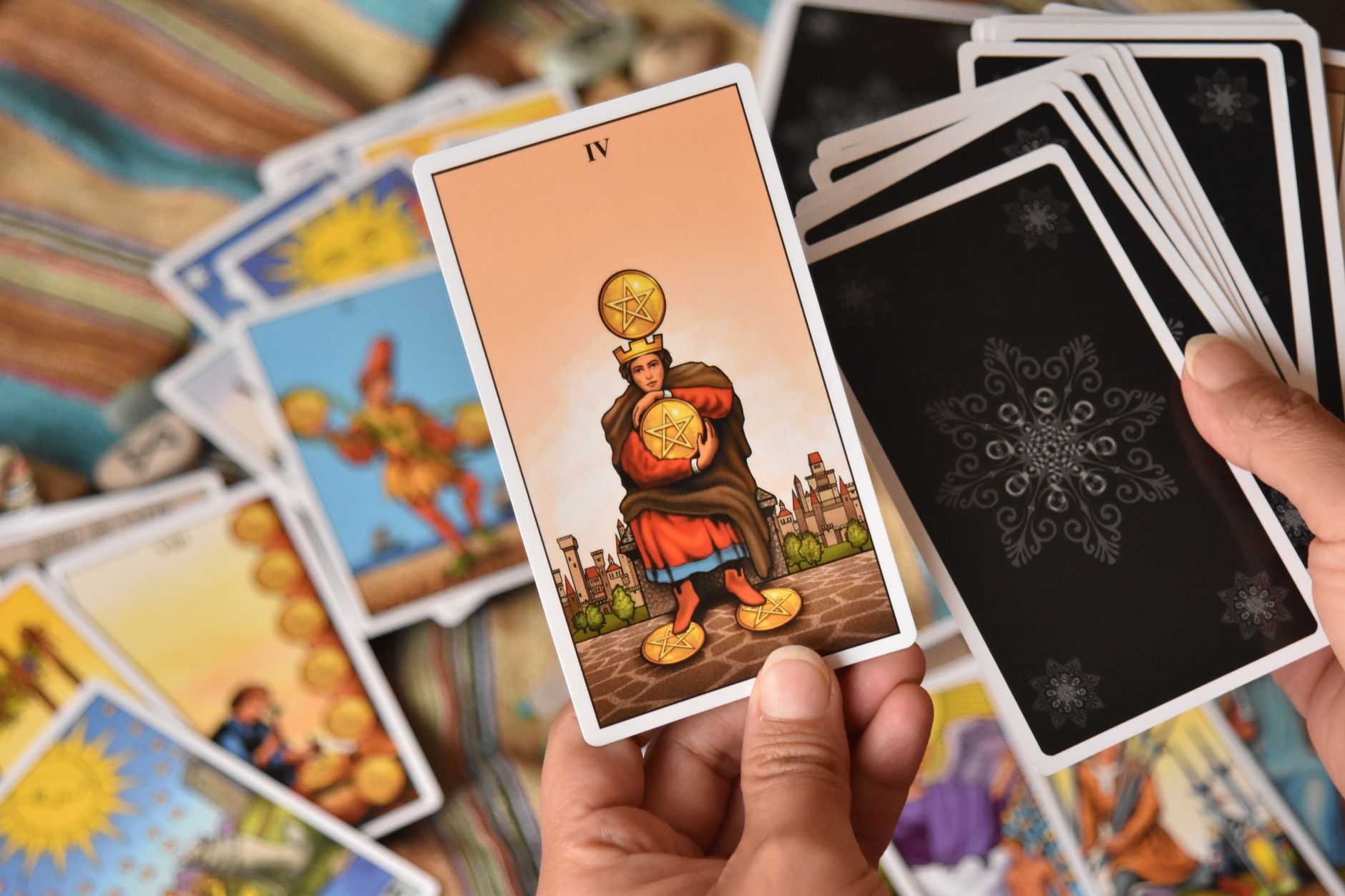
The first surviving tarot decks—the Visconti-Sforza of 1451—were hand-painted for Italian nobility, richly decorated with gold leaf and symbolic imagery. They were not meant for fortune-telling but for playing games. Yet today, the 78 cards are a living library of archetypal wisdom, and learning to read them is akin to learning a new language of the soul. As a lunar practitioner who tracks each phase from dark moon to full, I have found that aligning tarot study with the moon’s cycles transforms the experience from memorization to revelation. When I began, I felt overwhelmed by the sheer number of cards, but breaking them into lunar-charged chunks—Major Arcana under the new moon, Cups under the waxing crescent—made each symbol breathe. This guide will walk you through every card, from The Fool to the Ten of Pentacles, with specific moon phase correspondences, herbs, crystals, and journal prompts that ground each lesson in the night sky’s living poetry. You will learn not just meanings, but how to feel the cards pulse with the same tides that pull the oceans.
The Anatomy of the 78 Cards: Major Arcana, Minor Arcana, and the Four Suits
Every tarot deck contains 78 cards, split into two distinct families. The Major Arcana holds 22 cards numbered 0 through XXI, each representing a major life theme or archetypal journey. The Minor Arcana contains 56 cards divided into four suits—Wands, Cups, Swords, and Pentacles—each with 14 cards: 10 numbered cards (Ace through Ten) and 4 court cards (Page, Knight, Queen, King). The most common decks for beginners include the Rider-Waite-Smith (1909), which established the pictorial scenes we now take for granted, and the Thoth deck (Aleister Crowley, 1969), which integrates astrology and Qabalah with denser symbolism. The Waite-Smith deck costs around $22–$28 (a standard US Games version) and offers the easiest entry due to its clear imagery. For a slightly more intuitive path, consider the Golden Thread Tarot ($44, Labyrinthos) which uses a minimalist art style and includes a dedicated app with keyword meanings. I personally started with the Waite-Smith and switched to the Thoth after three years; the adjustment took two full moon cycles of daily practice. To anchor this structure in lunar reality: the 22 Major Arcana cards correspond to the 22 letters of the Hebrew alphabet and, in my practice, to the 22 phases of a lunar month if you count the void-of-course windows. On the night of a waxing crescent moon (illumination 23%, rising at 9:47 AM, setting at 10:15 PM), lay out all 56 Minor Arcana cards by suit and observe the colors—red for Wands (fire), blue for Cups (water), yellow for Swords (air), green/brown for Pentacles (earth). Burn a bundle of Artemisia vulgaris (mugwort) to open your intuition, and hold a piece of clear quartz (at least 4 cm in length) to clarify the divisions. Journal prompt for this phase: Which suit do I feel drawn to tonight, and what element does my current emotional weather reflect?
Building a Relationship with Your Deck: Cleansing, Consecration, and First Questions
A deck fresh from its box carries the energy of the factory, the shipper, and the hands that packed it. Before your first reading, cleanse it using a method tied to the moon. I recommend a full moon exposure: place the deck on a sill where moonlight falls directly for at least four hours. For the Beaver Moon (full illumination 100% at 11:16 PM EST on November 27, 2023, moon rising at 4:38 PM, setting at 6:22 AM), set your deck on a selenite plate ($15–$25 for a 10 cm slab) and arrange three Amethyst points (approx. 5 cm each) around it. After charging, wrap the deck in a black silk cloth to store. Consecration involves invoking a lunar deity if you work with one—I whisper to Selene, the Greek goddess of the full moon, and trace a crescent with my index finger over the cards. For your first questions, avoid phrasing like “Will I get the job?” because tarot is not a yes/no oracle; instead ask “What energy should I bring to my interview?” Under a new moon (illumination 2%, moon rises and sets with the sun, invisible to the naked eye), pull one card as the theme for the month. Record it in a dedicated journal. I use the Tarot Journal by Labyrinthos ($16, 200 pages, includes astrological grids). The herb for this new moon consecration is Salvia apiana (white sage) in a small bundle (about 10 cm long) — burn it for 30 seconds while passing the deck through the smoke. crystal: a polished labradorite (20–30 carats) placed on top of the deck overnight. Color of your altar cloth: deep violet for spiritual attunement. Journal prompt: What one truth am I inviting the cards to reveal to me this lunar cycle?
The Major Arcana: Symbolic Gateway from The Fool to The World
The 22 Major Arcana cards map the Fool’s Journey—a soul’s progression from innocence through trial to cosmic integration. The Fool (0) begins, leaping off a cliff with a small bag and a white rose, unaware of the precipice. The Magician (I) channels all four elements, tools on his table, one hand pointing to the heavens, the other to the earth. The High Priestess (II) sits between two pillars, a scroll in her lap, the moon at her feet—she corresponds most directly to lunar energy. During a new moon (illumination 0%, moon invisible, void-of-course for approximately 4 hours after the exact conjunction), I pull The High Priestess and meditate with a piece of moonstone (6–8 carats, polished into a cabochon) over my third eye. The herb for this card is mugwort again, but now I place the dried leaves (1 tablespoon) under my pillow for dream recall. Color: silver and pale blue on the altar. Each Major Arcana card has a planetary or zodiacal association—The Tower (XVI) is ruled by Mars, often appearing when a sudden collapse is imminent. In contrast, The Star (XVII) is ruled by Aquarius, bringing healing and hope under a waning gibbous moon (illumination 78%, rising at 9:10 PM, setting at 11:45 AM). For the entire Major Arcana, I recommend a 22-day study cycle aligned with the waxing phase to full moon. Start on the first visible crescent (day 3 of the lunar month, illumination 6%) with The Fool, and on the full moon (day 14) arrive at The Wheel of Fortune (X). Finish on the waning crescent (day 28) with The World (XXI). Journal prompt for the Fool: What cliff am I about to leap from, and what does my small bag contain? For The World: What cycle is completing in my life as the moon fades to darkness?
The Minor Arcana: Water, Fire, Air, Earth in the Four Suits
The 56 Minor Arcana cards represent the everyday joys, struggles, and rhythms. Wands (fire) correspond to passion, creativity, and will. Cups (water) to emotions, relationships, and intuition. Swords (air) to thought, conflict, and clarity. Pentacles (earth) to material life, work, and health. Each suit has 10 numbered cards and 4 court cards. The numbered cards progress from Ace (seed) to Ten (completion). For example, the Three of Swords—a heart pierced by three swords—is often read as heartbreak, but under a waning crescent moon (illumination 15%, moon rises around 4 AM, sets around 3 PM), its energy softens into healing. Pair this card with a rose quartz crystal (30–40 carats, unpolished) and a sachet of yarrow (Achillea millefolium) dried flowers (about 2 tablespoons) placed under your pillow for three nights. Color: soft pink on your reading cloth. For the court cards, Pages are messengers (earth of each element), Knights are action (fire), Queens are inner mastery (water), and Kings are outer authority (air). A common beginner mistake is to compare a Queen of Cups to a specific person in your life; instead, ask “Where in myself do I embody the Queen of Cups?” Under the full moon (illumination 100%), lay out all 16 court cards face down and choose one as your lunar guide for the cycle. I did this once under a Capricorn full moon (moon at 0° Capricorn 21′, rising 5:50 PM, setting 6:35 AM) and drew the King of Pentacles—that month I started a savings plan and rebuilt my work altar. Use a specific spread: assign one suit to each quarter of the moon’s phase. For example, during the first quarter (waxing, illumination 50%), work with Wands. Journal prompt: Which element (fire, water, air, earth) am I most avoiding this week, and why?
Interpreting Reversals: The Moon’s Shadow Side
Reversed cards occur when the card appears upside down in a reading—approximately 70% of my readings include at least one reversal. In lunar practice, think of a reversed card as the moon waning: the energy is internalized, blocked, or releasing. A reversed upright meaning is not negative; it is a call to look inward. For example, the reversed Tower (XVI) under a lunar eclipse (which happens roughly twice a year, with the moon illumination dropping to 0% and taking on a reddish hue for about 1 hour) indicates a slow dismantling rather than sudden disaster. The method I teach is simple: if a card is reversed, first read the upright meaning, then invert the interpretation to internal or delayed. For the Ace of Cups reversed, for instance, instead of new love, ask “What emotional block is preventing me from receiving?” Use a specific comparison: Mary K. Greer’s book The Complete Book of Tarot Reversals ($18, Llewellyn, 2002) recommends viewing reversals as obstacles, while Rachel Pollack in Seventy-Eight Degrees of Wisdom ($20, Weiser, 1980) sees them as opportunities for growth. I align with Pollack. Under a waning moon (illumination 45%, rising around 11 PM, setting around 1 PM), when the energy is ripe for shadow work, pull three cards with intent to examine a current struggle—purposely read them reversed. Hold a piece of black tourmaline (approx. 5 cm long, $8–$12) to ground the insights. Herb: lavender (Lavandula angustifolia) dried buds, 1 teaspoon in a cloth sachet, placed on the cards during the reading to calm emotional upheaval. Journal prompt: What part of my shadow is the reversed card illuminating tonight, and how can I embrace it before the new moon?
The Celtic Cross Spread and Lunar-Specific Layouts
The Celtic Cross is the classic ten-card spread, but it can intimidate beginners. I recommend starting with a simple three-card spread (past-present-future or mind-body-spirit) for the first month. Once comfortable, try the Celtic Cross under a full moon (illumination 100%). The positions are: 1) present situation, 2) crossing challenge, 3) past foundation, 4) recent past, 5) best outcome, 6) immediate future, 7) self, 8) environment, 9) hopes/fears, 10) final outcome. Use a traditional pattern: place card 1 in the center, card 2 horizontally across it, then four cards to the left (3,4) and right (5,6), then a vertical column to the right (7–10). A common variation is the Simplified Celtic Cross by Rachel Pollack, which removes cards 4 and 6 for a total of 8 cards—faster for beginners. For lunar practitioners, I designed a five-card lunar spread: card 1 (current moon phase energy), card 2 (what is being illuminated), card 3 (shadow aspect), card 4 (what to release), card 5 (guidance for next phase). Example: during the first quarter moon (illumination 50%, moon rises around noon, sets around midnight, typically in a mutable sign like Sagittarius), pull these cards. I once pulled The Chariot (VII) in position 1, Justice (XI) in position 2, and the Five of Cups reversed in position 3—it confirmed a need to stop dwelling on a past failure and charge forward. Use specific crystals for each position: moonstone in position 1, selenite in position 2, black obsidian in position 3, amethyst in position 4, clear quartz in position 5. Herbs: sprinkle dried rosemary (Salvia rosmarinus) on the cloth for memory retention. Journal prompt after the spread: Which card in this lunar spread speaks most loudly to the current moon phase, and what action will I take before the next phase?
Daily Practice and Journaling with the Moon’s Sign
Pull one card every morning, but instead of a generic interpretation, check the moon’s current sign and phase. For example, if the moon is in Scorpio (water) and you draw the Nine of Wands (fire), consider how defensive energy (Nine of Wands) may be heightened by Scorpio’s intensity. I use the app Moon Phase Calendar 2023 by Michael Diener (free, with in-app purchases for void-of-course data) to track the moon’s sign down to the minute. For daily pulls, I recommend the Moon Deck ($26, self-published, 44 cards) as a simplified companion, but for the full 78-card system, use the Labyrinthos app ($2.99/month for the premium version that includes all card meanings and a log). Under a cancer moon (water, emotional, nurturing), the cups suit is especially potent. One morning with an Aquarius moon (air, innovative, detached) and the moon in a void-of-course window (approximately 8 hours between 6:34 AM and 2:17 PM), I drew the Ace of Swords reversed—instead of immediate clarity, the void-of-course demanded rest. I journaled that day about the discomfort of waiting. Your journal can be a simple $5 composition notebook, but I prefer the Tarot Journal from The Green Lung (UK, £12, 240 pages with moon phase checkboxes). Record the date, moon phase, moon sign, void-of-course status, card pulled, your intuitive hit, and a one-sentence action step. Journal prompt for morning practice: How does the moon’s sign amplify or soften the energy of this card, and what small ritual can I perform today to honor that blend?
Common Mistakes and How the Moon Can Guide You Through Them
Beginners often rely too heavily on the guidebook or ask yes/no questions. The most common mistake is drawing cards in a panicked state, expecting a prediction rather than guidance. Another is shuffling without intention, leading to cards that feel random. Here’s a lunar solution: never read during a solar eclipse (approximately two per year, visible only in certain regions, with the moon covering the sun for about 2–5 minutes) unless you have at least six months of experience—the energy is too chaotic. Instead, use the new moon (illumination 0%) as a reset: shuffle your deck three times, each time asking “What do I need to release from the last cycle?” A third mistake is memorizing card meanings as static definitions. The Two of Swords under a waxing moon (illumination 30%) reads very differently than under a waning moon (illumination 70%). Under the waxing moon, it may indicate a decision you are avoiding; under the waning, it suggests the decision is already made and you are only waiting to act. Specific product comparison: the Rider-Waite-Smith Tarot Guidebook by Arthur Edward Waite (included with most decks, often just 78 keyword interpretations) versus Mary K. Greer’s Tarot for Your Self ($16, New Page Books, 2002) which offers 35 exercises and journaling prompts. I recommend Greer’s book for the first three months. To avoid the yes/no trap, rephrase questions using the word “how” or “what”. Instead of “Will I meet my soulmate?” ask “What energy should I cultivate to attract a loving partnership?” Under a full moon (illumination 100%), burn a small amount of cinnamon (Cinnamomum verum) powder (1/2 teaspoon) on a charcoal disk to activate the question. Journal prompt for this section: What is one mistake I made this week, and how did the moon’s phase contribute to that lesson?
Conclusion
Three concrete takeaway actions: first, memorize the structure of the 78 cards—22 Majors and 56 Minors in four suits—by laying them out physically under the next new moon. Second, adopt a daily one-card pull tied to the moon’s phase, recording the moon sign, void-of-course status, and your intuitive response in a dedicated journal. Third, practice one full spread (three-card or lunar five-card) per moon cycle, using the herbs and crystals I have detailed for each phase. If you do only one thing: tonight, under the current moon phase (check a lunar calendar—if it is a waxing crescent around 30% illumination), pull one card and sit with it for ten minutes without looking at a guidebook. Write down what you see, feel, and smell. Then cross-check with a trusted resource like the Laby
Join the Lunar Letters
Moon rituals, lunar guides, and ideas for your practice.
By subscribing, you request Moon Ritual Library emails. Read our Privacy policy.

🌙 Get a Free AI Tarot Reading
Luna reads the cards just for you — powered by AI, guided by the moon. No account needed.
Draw Your Cards Now ✨Powered by Luna's Circle — AI Spiritual Guidance
Free Resources for Your Practice
Download our free guides: 13 spells with a 30-day practice plan, plus a complete 2026 moon ritual calendar.
Free SpellbookMoon Calendar