This post contains affiliate links. As an Amazon Associate, we earn from qualifying purchases.
- In This Article
- Key Takeaways
- The Waning Crescent’s Astronomical Signature: Why Timing Matters
- What Banishing Actually Means at This Phase
- The Ingredient Formula: Herbs, Candles, and Correspondences
- Building Your Personalized Incantation
- The Full Ritual, Step by Step
- Crystals and Altar Setup for Waning Crescent Banishing
- Journal Prompts for This Lunar Window
- Can I do this banishing ritual if I can’t see the moon due to clouds or light pollution?
- What if I don’t have rue or can’t find it locally?
- How soon after the ritual will I notice results?
- Sources & further reading
- Related Articles
- Unlock Your Moon Magic
- Unlock Your Moon Magic
- Unlock Your Moon Magic
Disclosure: This post contains affiliate links. If you click through and make a purchase, we may earn a small commission at no extra cost to you. Thank you for supporting this site!
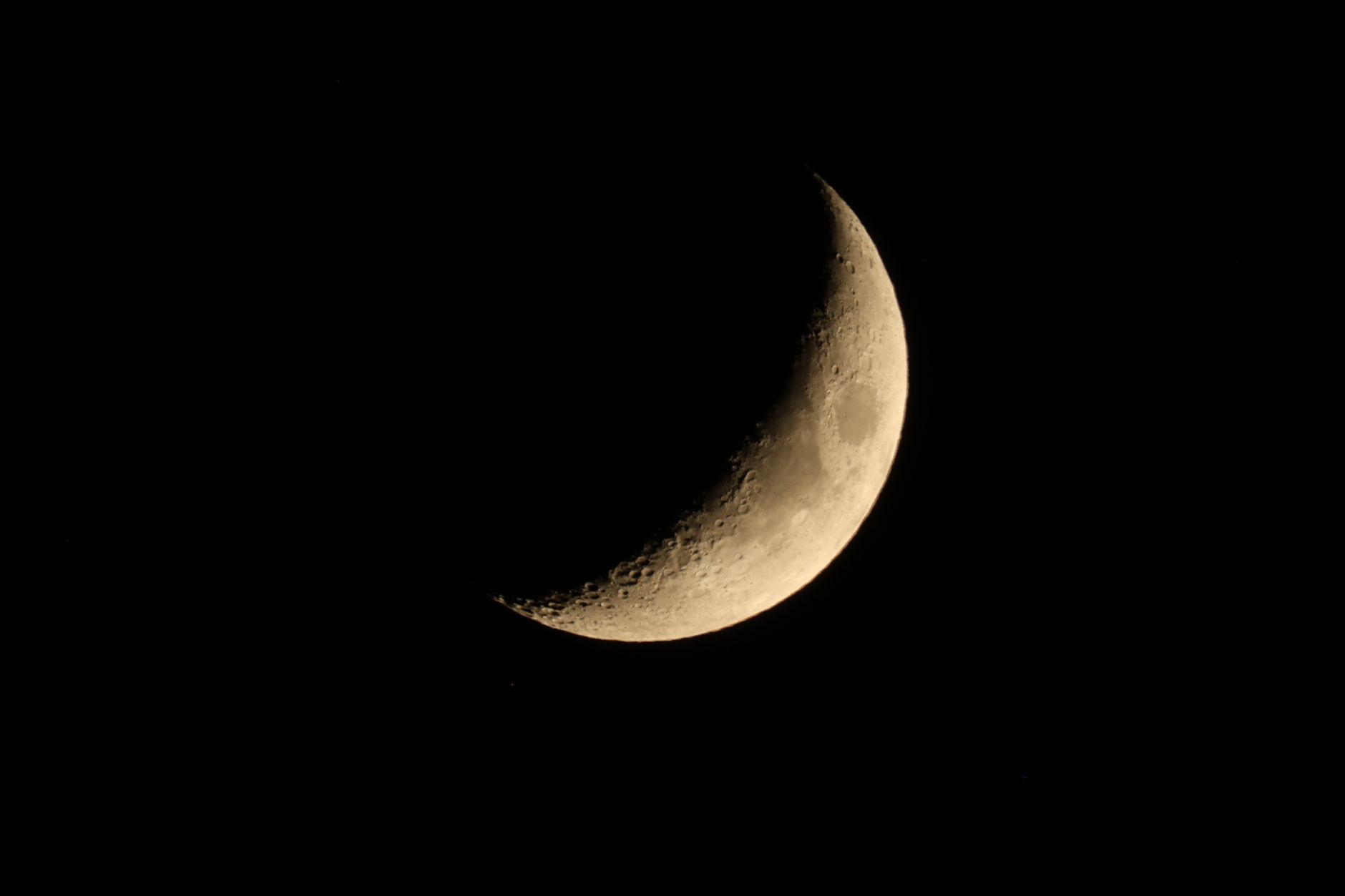
Last October, I stood over my altar at 4:40am with a black chime candle sputtering in the draft, watching the moon hang as a thin fingernail—just 6% illuminated—low in the eastern sky before dawn. That’s the Waning Crescent for you: the smallest sliver of visible moon, rising only an hour or two before the sun, and it is, without question, the single most potent window in the entire lunar cycle for banishing work. Most spellwork guides lump “waning moon” into one vague 14-day blob and call it a day. That’s a mistake. The final 3.5 days before the New Moon—when illumination drops below 15% and the moon sits within roughly 45 degrees of the sun—carry a different charge entirely than the Waning Gibbous or Third Quarter. This is the phase witches historically called “the moon of endings,” and if you time your banishing ritual to hit that narrow window, the results are sharper, faster, and considerably harder to walk back. Get the timing wrong, and you’re just burning a candle.
10 min read
In This Article
- The Waning Crescent’s Astronomical Signature: Why Timing Matters
- What Banishing Actually Means at This Phase
- The Ingredient Formula: Herbs, Candles, and Correspondences
- Building Your Personalized Incantation
- The Full Ritual, Step by Step
- Crystals and Altar Setup for Waning Crescent Banishing
- Journal Prompts for This Lunar Window
Key Takeaways
- The Waning Crescent’s Astronomical Signature: Why Timing Matters
- What Banishing Actually Means at This Phase
- The Ingredient Formula: Herbs, Candles, and Correspondences
- Building Your Personalized Incantation
The Waning Crescent’s Astronomical Signature: Why Timing Matters
The Waning Crescent occupies the final 3 to 4 days of the synodic lunar month, running from roughly Day 25 to Day 29.5 of the 29.53-day cycle. Illumination during this window falls from about 25% down to under 1%, and the moon itself becomes visible only in the pre-dawn eastern sky, typically rising between 3:00am and 5:30am depending on your latitude and the specific date. By the final 24 hours before New Moon, illumination often dips below 5%—I’ve tracked this using the U.S. Naval Observatory’s data tables and the Time and Date astronomical calendar, and the drop-off in the last 48 hours is steep enough that timing your ritual within a 6-hour window genuinely changes the felt intensity of the work.
Here’s the detail almost every ritual guide skips: the moon goes void-of-course multiple times during the Waning Crescent as it changes zodiac sign, and this matters enormously for banishing magic. A void-of-course moon—the period after the moon makes its last major aspect in one sign before entering the next—can last anywhere from 20 minutes to over 26 hours. Casting during a long void-of-course window tends to produce spells that fizzle rather than land; energy raised has nowhere coherent to go. Check an ephemeris (I use Astro-Seek’s free void-of-course calculator) before you light a single match, because a banishing spell cast during a 14-hour void window in late Waning Crescent Scorpio, for example, will feel different than one cast an hour after the moon enters Sagittarius.
My rule, tested over four years of tracking: cast your banishing spell in the final 72 hours before New Moon, avoid any void-of-course period longer than 90 minutes, and favor the pre-dawn hours when the crescent is actually visible above the horizon. If the sky is overcast and you can’t see her, trust the almanac over your eyes—the moon’s gravitational and energetic pull doesn’t require visibility to function.
Casting during a long void-of-course window tends to produce spells that fizzle rather than land; energy raised has nowhere coherent to go.
What Banishing Actually Means at This Phase
The Waning Crescent is the moon’s exhale. Every phase before it—New, Waxing, Full, Waning Gibbous, Third Quarter—has been building, peaking, and beginning to release. By the Crescent, there’s almost nothing left to hold onto. In folk magical traditions from the British Isles through Appalachian hoodoo-adjacent practice, this final sliver was known as the “dark of the moon’s doorway,” a threshold phase where old patterns, entities, and habits are meant to be swept clean before the New Moon opens a fresh fourteen-day cycle of building.
This is different from Full Moon release work, which tends to be dramatic and cathartic—think releasing grief into a bonfire. Waning Crescent banishing is quieter and more surgical. You’re not screaming something out of your life; you’re closing a door so softly the thing on the other side doesn’t even notice until it’s already locked out. I’ve found this phase works best for banishing habitual patterns, energetic cords to specific people, low-grade curses or ill will, and stuck emotional residue—things that need precision removal rather than explosive release.
What it does not do well: banishing something you’re still emotionally attached to. If you haven’t grieved the relationship, job, or identity you’re trying to banish, the Waning Crescent’s low-energy, contractive quality can leave the spell feeling incomplete or even make you feel more haunted by the thing afterward. Do your grief work during the Waning Gibbous first. Save the Crescent for when you’re genuinely ready to let the door close.
Save the Crescent for when you’re genuinely ready to let the door close.
The Ingredient Formula: Herbs, Candles, and Correspondences
I’ve built this formula through trial, error, and a fair number of scorched altar cloths. The core banishing herb blend I use, and the one I’ll walk you through, centers on three plants with documented banishing lineage in European and Appalachian folk magic:
- Mugwort (Artemisia vulgaris) — 2 tablespoons, dried. Governs psychic protection and severing energetic attachments; burn as loose incense or add to a sachet.
- Rue (Ruta graveolens) — 1 tablespoon, dried, used sparingly because fresh rue sap is a skin irritant. Historically called “herb of grace,” it’s one of the strongest hex-breaking and banishing herbs in the Western tradition.
- Black peppercorn (Piper nigrum) — 1 teaspoon, crushed. Adds aggressive, fast-acting expulsion energy; I add this only when banishing something with real teeth, like a persistent negative influence rather than a mild bad habit.
Pair this with a black chime candle (5-6 inches, unscented beeswax or soy) for absorption and banishing, or a white taper if you want to banish while leaving room for something new to enter immediately after—black seals the door shut, white seals it and lights the hallway. Anoint the candle with a single drop of clove oil (Syzygium aromaticum) worked from base to wick, which is the traditional direction for banishing work, moving energy away from you rather than toward you.
For the working surface, I burn the herb blend in a heat-safe cauldron or cast-iron dish over a charcoal disc, never directly on an open flame—loose mugwort catches fast and burns hot, and I learned that the hard way with a singed eyebrow in 2021. If smoke isn’t accessible to you (apartment living, respiratory issues, fire codes), steep the same three herbs in water for 20 minutes, strain, and use the cooled liquid to anoint your candle and altar corners instead. The correspondence holds; the delivery method is flexible.
The correspondence holds; the delivery method is flexible.
Building Your Personalized Incantation
Generic banishing incantations—”I banish thee, be gone from me”—work, but they work the way a form letter works. Specific incantations, built from your own language and named to your exact situation, work the way a direct confrontation works. Here’s the four-part structure I teach:
- Naming — Speak the specific pattern, person, or influence by name or clear description. Vague language produces vague results. “I banish negativity” is weak. “I banish the habit of checking my phone the moment I wake, the anxious grip it has on my mornings” is precise.
- Acknowledgment — Name what the thing gave you, even briefly, even bitterly. This isn’t gratitude journaling; it’s honesty. “You taught me to notice how tired I really am” closes the loop so the banishing doesn’t leave an open wound.
- Severance — The active verb. Use present tense, first person, and physical imagery: “I cut the cord,” “I close the door,” “I sweep you from this house.” Say it three times, once for each visible ring of the crescent’s curve, if you like the symbolism—I do.
- Sealing — Declare the space now clear and state what you invite in its place, even if simply “peace” or “quiet mornings.” This keeps the void from filling itself with something equally unwanted.
Here’s a real example I wrote for the phone-habit banishing above: “I name you, the reach for the screen before my eyes are even open. You taught me how much I fear silence. Now I cut you from my hands, I close this door on my nightstand, I sweep you from my first waking breath. This space is clear. I invite ten quiet minutes, mine alone.” Write yours in your own voice, in your own words, and don’t polish it into something that sounds like a greeting card. The rougher and more specific it is, the more it’s actually yours.
The Full Ritual, Step by Step
This entire working takes about 25-30 minutes and is best performed in the final 72 hours before New Moon, ideally during the pre-dawn hours when the crescent is above the horizon.
- Cleanse your space with the smoke of the mugwort-rue blend or the cooled herbal wash, moving counter-clockwise around the room—the traditional direction for banishing, opposite the clockwise motion used for drawing-in work.
- Anoint your black or white candle with clove oil, base to wick, and set it in a heatproof holder at the center of your altar.
- Write the name of what you’re banishing on a small piece of paper. Fold it away from you three times.
- Light the candle and speak your four-part incantation aloud, slowly, three full times.
- Hold the folded paper to the candle flame (carefully, over a heatproof dish) and let it burn completely.
- Let the candle burn out fully on its own if you can supervise it, which typically takes 3-4 hours for a chime candle; if you must extinguish it, snuff rather than blow, to avoid scattering the energy you just gathered.
- Bury the cooled ash outside your property line, or at a crossroads if the tradition speaks to you, before the New Moon rises.
I’ve run this exact sequence more than a dozen times, and the step people skip is the burying. Don’t skip it. Leaving the ash on your altar or in your trash can keeps a psychic thread attached to your home; taking it physically off your property completes the severance the incantation started.
Crystals and Altar Setup for Waning Crescent Banishing
Black tourmaline (Schorl) is my non-negotiable stone for this work—place a piece roughly the size of your thumb at the northernmost point of your altar, since north correlates with grounding and closure in most Western ceremonial frameworks. Charge it under the Waning Crescent moonlight for at least 2 hours before use if the sky is clear; if it’s cloudy, an overnight charge on a windowsill still works, since the moon’s gravitational influence doesn’t require direct light exposure.
Add smoky quartz for absorbing residual negative energy and obsidian (Apache tear or standard black obsidian) for mirroring back anything that isn’t yours to carry. Avoid rose quartz and selenite in this particular ritual—both are high-vibration, drawing-in stones better suited to Waxing or Full Moon work, and I’ve noticed they tend to soften banishing energy rather than sharpen it, which defeats the purpose here.
After the ritual, wrap your black tourmaline in black cloth and store it separately from your other stones for at least one full lunar cycle before using it again for anything but banishing work—it holds onto the specific frequency of what it absorbed, and I don’t mix that with abundance or love crystals until it’s been cleansed with running water and re-charged under a fresh Waning Crescent.
Journal Prompts for This Lunar Window
The Waning Crescent is shadow work territory, and writing before or after your ritual sharpens the spell’s precision considerably. Sit with these before you light the candle:
- What am I still getting from the thing I’m banishing, even if it’s uncomfortable to admit?
- If this pattern is gone by the New Moon, what specifically fills that space instead?
- What’s the earliest memory I have of this influence taking root in my life?
And after, once the candle has burned down: “What does the silence feel like now that the door is closed?” I’ve found the answers shift noticeably between the “before” and “after” writing—usually within the same 24-hour window—which is one of the clearer signs the ritual actually did something rather than just feeling nice.
Banish with intention, not just black candles: time your ritual to the final 72 hours before New Moon, check for long void-of-course windows before you light anything, and build an incantation specific enough that it couldn’t apply to anyone else’s life but yours. Use the mugwort-rue-peppercorn blend for anything with real bite, skip the peppercorn for gentler habit-breaking, and always bury your ash before the New Moon rises to complete the severance. If you take one thing from this: the burying step is not optional, and neither is the honesty in your incantation’s acknowledgment line. Come back and tell us in the comments how your Crescent working landed—this community learns fastest when we compare notes across real, lived ritual.
Can I do this banishing ritual if I can’t see the moon due to clouds or light pollution?
Yes, absolutely. The moon’s gravitational and energetic influence during the Waning Crescent doesn’t depend on visibility, only on its actual position in the 29.53-day cycle. Use an ephemeris or a free app like Time and Date’s moon phase calculator to confirm you’re within the final 72 hours before New Moon, and proceed exactly as written. I’ve cast this same ritual under thick Pacific Northwest cloud cover with results indistinguishable from clear nights.
What if I don’t have rue or can’t find it locally?
Substitute with dried bay leaf (Laurus nobilis), which carries similar protective-banishing correspondence and is far easier to source at any grocery store. The formula still works with just mugwort and bay if peppercorn also isn’t available—the mugwort alone carries enough severing energy for habit and low-level cord-cutting work. Save the full three-herb blend for stronger banishing needs, like persistent negative influences from other people.
How soon after the ritual will I notice results?
Most practitioners I’ve spoken with, myself included, notice shifts within the following New Moon to First Quarter window, roughly 3-10 days after casting. Habit-banishing tends to show results fastest, often within 48-72 hours, while banishing tied to other people’s energy or long-standing patterns can take a full lunar cycle to fully clear. If nothing shifts after two full cycles, revisit your incantation’s naming step—vague language is the most common reason banishing spells stall.
Deepen your practice, one ritual at a time
Join our circle for seasonal rituals, moon guides, and gentle prompts — sent with intention, never spam.
Sources & further reading
- Casting (en.wikipedia.org)
Join The Mystic Circle
Weekly spells, moon rituals & magickal wisdom — plus a free ritual planner.

🌙 Get a Free AI Tarot Reading
Luna reads the cards just for you — powered by AI, guided by the moon. No account needed.
Draw Your Cards Now ✨Powered by Luna's Circle — AI Spiritual Guidance
Your Free Moon Ritual Calendar
24 rituals for every new and full moon of 2026, plus sabbat celebrations, moon water guide, and monthly correspondences.
Get the Moon CalendarAlso: Free Spellbook