This post contains affiliate links. As an Amazon Associate, we earn from qualifying purchases.
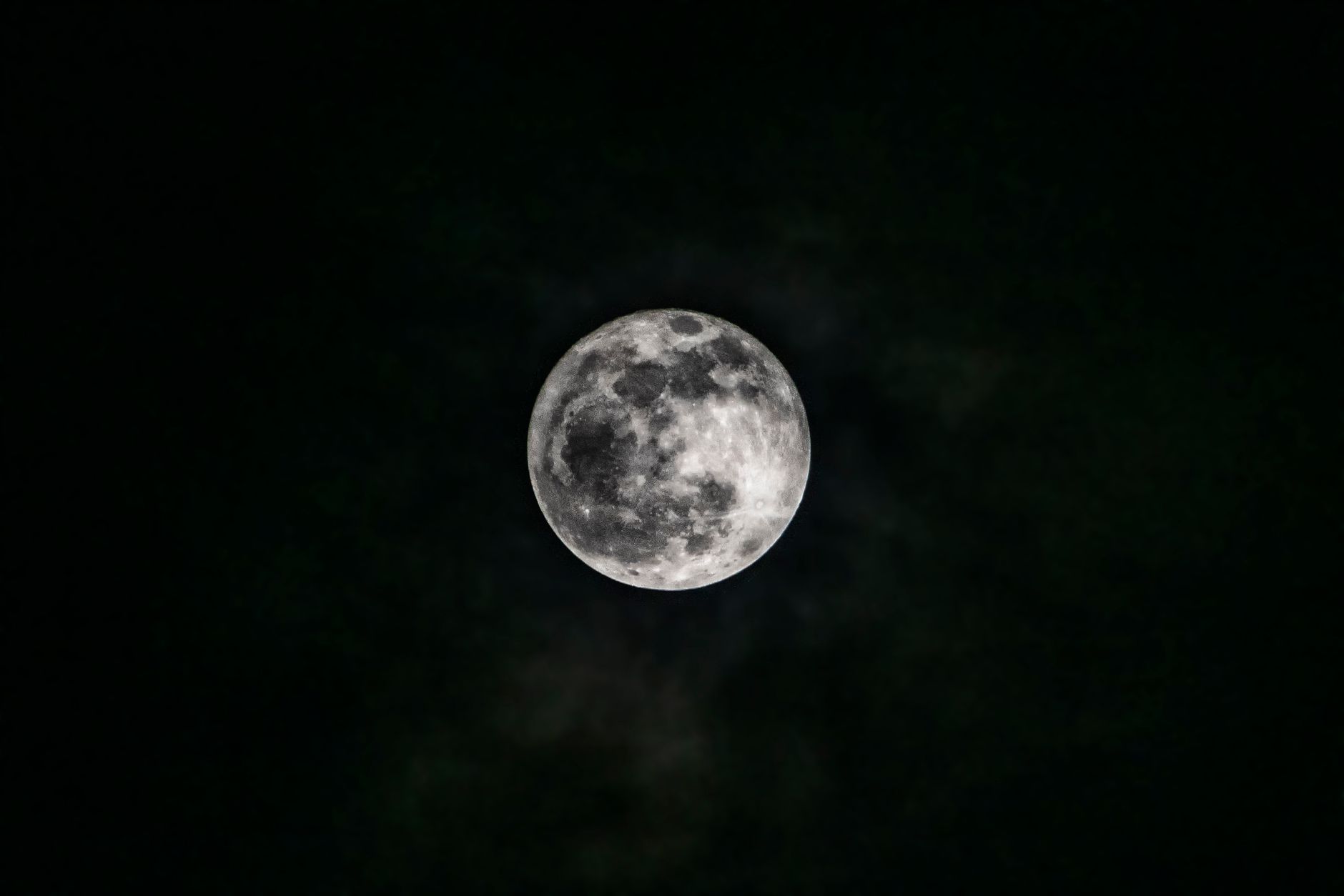
The night of the full moon, I always wake at 2:47 AM. Not groggy, not restless — wide awake, as if someone called my name by the light of a 99.8% illuminated disk. For years I assumed this was the moon’s undeniable pull, a force that science simply hadn’t bothered to measure. Then I opened the peer-reviewed literature and found something far more layered: a handful of small but real effects buried under decades of null results, confirmation bias, and folklore that refuses to die. As a lunar practitioner who tracks every phase, I had to reconcile what I feel with what the data actually shows. This article does not ask you to abandon your moon water or put away your selenite. It asks you to hold two truths at once: the moon may not turn us into werewolves, but something in our biology does respond to its light. The question is whether that response is meaningful enough to shape our rituals — or whether the ritual itself is what shapes us.
Where the Lunar Myth Began
The word “lunacy” comes directly from Luna, the Roman goddess of the moon. Ancient Greek physician Hippocrates wrote that “one who is seized with terror, fright, and madness during the night is being visited by the moon.” By the Middle Ages, full moons were blamed for sleepwalking, seizures, and violent outbursts — a belief so entrenched that English common law once accepted lunar influence as a mitigating factor in criminal cases. These ideas were not born from data but from observation filtered through superstition: when something strange happened on a full moon night, it was remembered; when nothing happened, it was forgotten.
This confirmation bias has kept the lunar effect alive for millennia. A 2012 survey by the University of Basel found that 43% of healthcare workers still believe the full moon affects patient behavior, despite no consistent evidence. The persistence is understandable — we are pattern-seeking creatures, and the moon offers a vivid, repeating cycle that begs to be linked to human experience. But belief does not equal mechanism. When researchers at the University of Washington analyzed 20 studies on lunar phase and psychiatric admissions in 1985, they found zero significant correlation across more than 100,000 cases. The myth persists because it feels true, not because it has been proven true.
What Sleep Studies Actually Reveal About Moon Phases
The most cited evidence for a lunar effect comes from sleep research. In 2013, Christian Cajochen and his team at the University of Basel published a study in Current Biology showing that around the full moon, participants took five minutes longer to fall asleep, spent 30% less time in deep sleep, and had lower melatonin levels — all measured in a controlled laboratory with no windows. The study was small — only 33 volunteers — but it was rigorous. The results suggested that even without seeing the moon, our bodies somehow knew its phase.
A 2021 study in Science Advances by Casiraghi and colleagues went further. Using wrist monitors from 98 participants across three indigenous communities in Argentina, they found that sleep onset was delayed by 30 to 60 minutes on the nights preceding the full moon, and total sleep duration decreased by an average of 46 minutes. Crucially, these effects occurred before the moon was even visible — during the waxing phase when moonlight at night is minimal. This points to an internal circalunar clock, not a direct response to brightness. The mechanism may involve melatonin suppression by even trace light levels, or an ancient evolutionary rhythm tied to tidal or gravitational cues.
But here is where nuance matters. A 2022 meta-analysis in Sleep Medicine Reviews pooled data from 17 studies and found that while sleep onset and duration showed small lunar phase effects, the average difference was less than 25 minutes — statistically significant but clinically negligible for most people. The effect is real but subtle. It does not explain insomnia crises, emotional breakdowns, or the chaos that folklore attributes to the full moon. For practitioners, this means your restless full moon night has a biological basis — but it is not a license to blame every bad mood on lunar alignment.
Emergency Rooms, Mental Health, and the Full Moon
If the full moon truly caused behavioral upheaval, emergency rooms would see the spike. They do not. A 2004 study in Psychiatric Services examined 3,500 suicide attempts over five years and found no correlation with lunar phase. A 2019 analysis in Frontiers in Pediatrics tracked 25,000 pediatric
Related from our network
- Separation Anxiety in Toddlers: (familyflourish)
- Complete Guide to Lunar Phases in Wicca Rituals (animalsouldecoder)
- How to Make Moon Water: History, Method, and What It Actually Does (herluxerituals)
Join The Mystic Circle
Weekly spells, moon rituals & magickal wisdom — plus a free ritual planner.

🌙 Get a Free AI Tarot Reading
Luna reads the cards just for you — powered by AI, guided by the moon. No account needed.
Draw Your Cards Now ✨Powered by Luna's Circle — AI Spiritual Guidance
Your Free Moon Ritual Calendar
24 rituals for every new and full moon of 2026, plus sabbat celebrations, moon water guide, and monthly correspondences.
Get the Moon CalendarAlso: Free Spellbook