This post contains affiliate links. As an Amazon Associate, we earn from qualifying purchases.
- Understanding the Lunar Cycle: The Foundation of Any Moon Ritual
- Setting Up Your Sacred Space: Tools, Altars, and Environment
- New Moon Rituals: Planting Seeds for Growth
- Full Moon Rituals: Harnessing Peak Energy and Manifestation
- Waning Moon Practices: Release, Rest, and Reflection
- Waning Moon Practices: Release, Rest, and Reflection
- Integrating Moon Rituals Into Daily Life
- Advanced Techniques: Customizing and Deepening Your Practice
- Conclusion
- Unlock Your Moon Magic
- Unlock Your Moon Magic
- Unlock Your Moon Magic
The Complete Guide to Creating Your Personal Moon Ritual Practice
There’s a quiet magic in syncing your inner rhythm with the sky. Across cultures and centuries, the moon has served as a mirror for human intention—guiding planting, harvest, ceremony, and reflection. A personal moon ritual practice isn’t reserved for witches or mystics; it’s a flexible, grounded way to mark time, set goals, and cultivate presence. This guide will walk you through building a sustainable, meaningful moon ritual tailored to your life, space, and intentions. You’ll learn how to track lunar phases, design simple ceremonies for new and full moons, choose tools that align with your values, and adapt ancient traditions to modern routines. No prior experience is required—just curiosity and a willingness to connect with something larger than yourself.
Understanding the Lunar Cycle: The Foundation of Any Moon Ritual
The moon moves through eight distinct phases over approximately 29.5 days, a period known as a synodic month. This cycle begins with the New Moon, when the moon is positioned between Earth and the Sun, making it invisible from our vantage point. In Western astrology and many spiritual traditions, the New Moon is considered an ideal time for planting seeds—both literal and metaphorical. It marks the start of a new cycle, offering a clean slate for setting intentions.
As the moon waxes—gradually increasing in visibility—it builds toward the First Quarter, then the Waxing Gibbous phase. By the time it reaches the Full Moon, the entire face of the moon is illuminated, creating a powerful moment of culmination and manifestation. The Full Moon typically occurs about two weeks after the New Moon and is often associated with heightened energy, emotional intensity, and clarity. Many practitioners report increased sensitivity to sound, light, and emotion during this phase.
Following the Full Moon, the moon enters its waning phase, decreasing in visible surface area. This period is traditionally linked with release, letting go, and reflection. The Last Quarter marks the midpoint of the waning cycle, leading into the Waning Crescent, or Dark Moon, just before the next New Moon. Some traditions observe the Dark Moon as a separate phase entirely, using it for rest, introspection, and spiritual cleansing.
Tracking these transitions doesn’t require expensive software or apps—though several exist, like TimeandDate.com’s lunar calendar, which provides precise timings down to the minute. For a tactile approach, many people use bullet journals or wall calendars marked with moon phases. NASA’s official website also offers detailed monthly charts for those who prefer scientific accuracy. Whether you’re following the calendar or going by feel, understanding the rhythm of waxing and waning gives your rituals structure and purpose.
Setting Up Your Sacred Space: Tools, Altars, and Environment
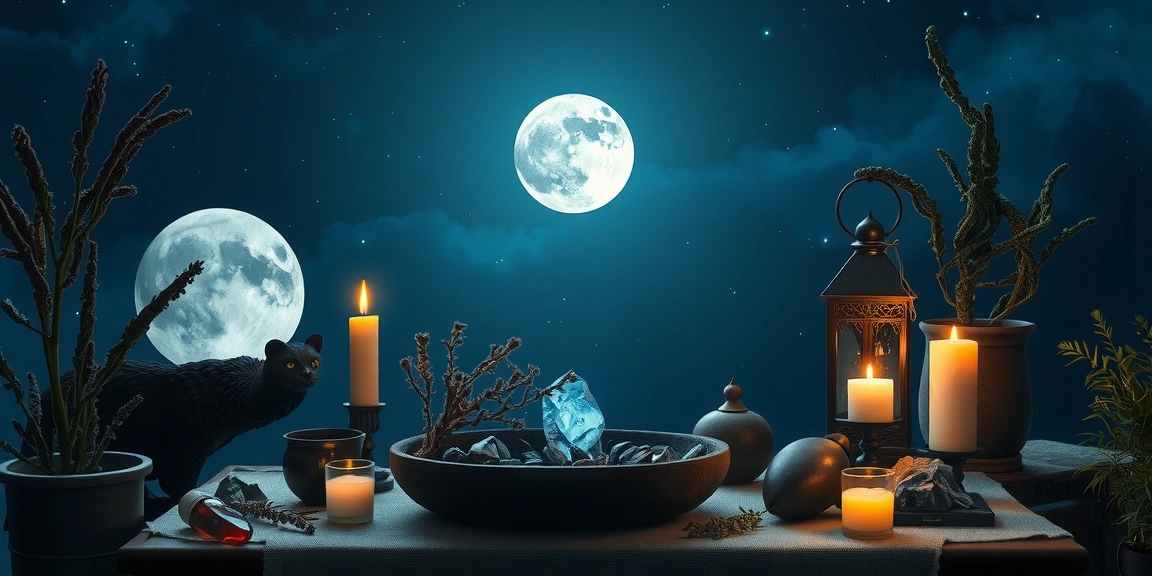
Your moon ritual space should reflect your personality and intentions without requiring significant investment. A dedicated corner of a room, a windowsill, or even a small shelf can serve as your altar. According to author Rachel Patterson, whose book *Witchery* has sold over 400,000 copies and outlines practical approaches to modern witchcraft, an altar should include four elements: earth (represented by Crystals, soil, or dried herbs), air (feathers, incense, or candles), fire (candle flames or red/orange stones like carnelian), and water (a bowl of water or sea salt).
For materials, consider starting with what you already own. A white or silver candle—approximately $8 to $12 at most metaphysical shops—symbolizes purity and lunar energy. Palo santo sticks, priced around $6 to $10 per bundle, offer a clean-burning smudging option. Crystals such as moonstone (commonly $5 to $15 depending on size), clear quartz, or selenite can anchor your intentions. These items are widely available online and in local metaphysical stores.
Timing plays a subtle but powerful role. Most practitioners recommend lighting candles and beginning formal work within two hours of sunset on either the New or Full Moon. During the New Moon, aim for the moment of exact conjunction—when the moon and sun align—which can be found on astronomy websites like TimeandDate.com. Full Moon timing varies slightly by location, but the peak illumination usually occurs between 10 PM and 2 AM local time, making late evening the optimal window for active ritual work.
If you live in a shared space or have concerns about scent sensitivity, opt for unscented candles and essential oil diffusers instead of incense. Many users report success with soy-based candles from brands like Paddywax or Heretic, which burn cleanly for 40 to 50 hours and cost between $15 and $25. For those who want a more aromatic experience, loose sage or white copal resin—available in 1-ounce quantities for under $10—can be burned safely in a heat-resistant dish.
New Moon Rituals: Planting Seeds for Growth
The New Moon is perhaps the most popular phase for intention-setting, and for good reason. Astrologer Susan Miller notes that all ten planets remain in the same sign during this phase, amplifying focus and momentum in one area of life. To perform a basic New Moon ritual, gather your supplies—preferably in silence or with soft instrumental music—and spend the first five minutes breathing deeply and grounding yourself.
Next, write down one to three specific intentions related to growth, abundance, or new opportunities. Keep them concise and phrased in the present tense whenever possible. One widely used method among modern witches involves writing on actual paper with a pen, then placing the note under a small bowl of water overnight to absorb lunar energy. Some practitioners add a sprig of rosemary or a few drops of jasmine essential oil nearby, since these plants and scents are traditionally associated with manifestation and psychic development.
After recording intentions, light a white or pale blue candle—colors linked to communication and new beginnings—and visualize each goal as though it has already been achieved. Spend no longer than ten minutes on visualization, then blow out the candle and dispose of the wax carefully. Many practitioners wrap used candle stubs in newspaper and store them in sealed containers until disposal to avoid accidental fires.
Some practitioners incorporate additional elements based on planetary positions or zodiac signs. For example, if the New Moon falls in Taurus—the earth sign ruled by Venus—adding green candles or items related to prosperity becomes especially fitting. Similarly, a New Moon in Gemini—ruled by Mercury—might call for writing tools or books relevant to learning and communication.
Full Moon Rituals: Harnessing Peak Energy and Manifestation
While the New Moon signals fresh starts, the Full Moon invites culmination and release. It’s common during this phase to engage in cleansing rituals, meditation practices, or ceremonies that honor completion. Unlike the inward focus encouraged during darker phases, Full Moon energy encourages expression, movement, and openness.
A straightforward Full Moon ritual starts with decluttering your sacred space—literally sweeping away debris or symbolically clearing negative thoughts through journaling. Many practitioners choose to write down anything they wish to let go of—habits, relationships, fears—and either burn the paper safely in a fireproof container or tear it up and flush it down the toilet. This practice, sometimes called “moonburning,” is reported by thousands of practitioners across online forums like Reddit’s r/witchcraft community.
Charging crystals under the Full Moon is another popular activity. Simply placing stones outside or near a window where they receive direct moonlight for at least four hours allows them to absorb amplified energy. Clear quartz, amethyst, and black tourmaline are frequently chosen because they’re believed to enhance intuition, promote calm, and offer protection respectively. These stones generally range from $3 to $20 each depending on quality and size.
Drinking moon-charged water is also common during this phase. To prepare it, place a glass jar filled with purified water under the Full Moonlight—ensuring the lid remains closed—and leave it overnight. Some practitioners cover the jar with cloth secured by a rubber band rather than leaving it uncovered, citing safety concerns and contamination risks. The resulting liquid is consumed the following morning, often mixed with lemon juice or honey for flavor.
Waning Moon Practices: Release, Rest, and Reflection
>
Waning Moon Practices: Release, Rest, and Reflection
As the moon decreases in size following the Full Moon, its energy shifts toward elimination and restoration. During the waning phases—including the Last Quarter, Waning Gibbous, and Waning Crescent—practitioners often focus on breaking patterns, releasing attachments, and preparing for renewal. This period lasts roughly two weeks and overlaps with the autumn season in many hemispheres, further reinforcing themes of harvest and surrender.
One effective waning moon practice involves creating a “release list”—a written inventory of qualities, behaviors, or situations you’d like to eliminate. Similar to the Full Moon burn ritual, many individuals fold their lists into origami shapes or seal them inside envelopes marked with dates. Some mail these letters to themselves later, opening them once the next Full Moon arrives. Postage costs average around $0.60 per letter via USPS First-Class Mail service.
Journaling becomes particularly valuable during this time. Prompts might include: What no longer serves me? Where am I holding back? What fears keep recurring? Many practitioners dedicate specific pages in their grimoires or bullet journals to tracking emotional shifts throughout the waning cycle. Studies cited in *The Journal of Humanistic Psychology* suggest expressive writing improves mental health outcomes by reducing stress hormones and increasing self-awareness.
Physical cleansing practices complement internal work. Taking salt baths infused with lavender essential oil or Epsom salts helps relax muscles and refresh the senses. Brands like Dr. Teal’s sell pre-made bath products ranging from $7 to $12, though DIY versions using generic ingredients cost significantly less. Adding dried marigold petals or crushed eggshells enhances the earthy quality of the experience. Always ensure the bathwater cools to lukewarm before entering, especially after extended exposure to candle heat or incense smoke.
During the final stretch—the Waning Crescent, also called the Dark Moon—many practitioners observe periods of enforced stillness. Meditation sessions lengthen, screens dim, and social obligations minimize. Some report feeling unusually fatigued or introspective during this phase, possibly due to melatonin fluctuations triggered by reduced moonlight.
Integrating Moon Rituals Into Daily Life
Creating consistency proves challenging when balancing busy schedules, family obligations, or demanding careers. However, integrating moon rituals into daily routines often requires minimal disruption. One successful strategy involves aligning smaller acts with major phases—for instance, brewing herbal tea only during Full Moons or changing bedding weekly during New Moons to welcome fresh energy.
Digital calendars support long-term tracking. Apps such as Co–Star or TimeandDate.com send notifications alerting users to exact moonrise times and phase changes. Users praise these platforms for customizable reminders and accurate geolocation data. Free versions suffice for basic needs, while premium subscriptions—costing $5 to $10 monthly—unlock deeper insights like tarot card interpretations or personalized affirmations.
Community groups amplify motivation. Local metaphysical shops frequently host free or low-cost moon circle gatherings—with suggested donation amounts ranging from $5 to $15. Online communities thrive through Discord servers and Facebook groups where members share photos, ask questions, and coordinate virtual ceremonies. Platforms like Insight Timer also feature guided meditations specifically designed for moon phases, many offering tiered pricing models starting at zero dollars.
Maintaining flexibility prevents burnout. If missed rituals accumulate guilt, simplify future practices. Even ten minutes spent gazing at the moon through a window qualifies as meaningful engagement. Some practitioners alternate between elaborate quarterly celebrations and brief monthly check-ins, adjusting depth according to seasonal energy levels.
Advanced Techniques: Customizing and Deepening Your Practice
Once foundational habits establish themselves, practitioners often explore advanced techniques tailored to personal goals. Astrology integration proves popular—matching moon sign transits with relevant rituals. For example, a Full Moon in Scorpio may prompt shadow work exercises, whereas a New Moon in Leo encourages creative projects or public speaking preparations. Resources like *The AstroTwins’ Daily Horoscope* provide accessible breakdowns linking celestial movements to actionable advice.
Tarot and oracle cards frequently appear alongside moonwork. Pulling one card during each phase offers symbolic guidance interpreted differently depending on whether the moon ascends or descends. Decks like *Moonology* by Yasmin Boland retail for approximately $18 and contain illustrated prompts encouraging deeper reflection. Independent reviewers on Amazon rate highly those combining visual storytelling with practical exercises.
Seasonal variations enrich long-term practice. Winter months emphasize introspection and hearth-centered rituals, while summer welcomes outdoor festivals celebrating solar-moon synchronicity. Harvest seasons inspire gratitude-focused celebrations incorporating locally sourced produce or handmade crafts. Adapting traditions to regional climates keeps practices grounded and culturally sensitive.
Moon diaries offer structured documentation opportunities. Available from publishers like Llewellyn for roughly $12 annually, these notebooks prompt daily reflections aligned with lunar rhythms. Entries typically cover mood changes, synchronistic events, and intuitive insights observed during specific phases. Over time, patterns emerge revealing how individual energy responds to cosmic influences.
Conclusion
Developing a consistent moon ritual practice enriches lives through ritualized mindfulness, intentional planning, and rhythmic alignment with natural cycles. Whether you begin with simple candle-lighting ceremonies or evolve toward multi-layered celebrations involving astrology, divination, and community collaboration, progress depends on patient experimentation rather than rigid adherence to doctrine.
Remember that authenticity trumps perfection—your unique interpretation matters more than replicating someone else’s tradition verbatim. Start small, stay curious, and trust whatever unfolds beneath the moon’s ever-changing gaze.
Join the Lunar Letters
Moon rituals, lunar guides, and ideas for your practice.
By subscribing, you request Moon Ritual Library emails. Read our Privacy policy.

🌙 Get a Free AI Tarot Reading
Luna reads the cards just for you — powered by AI, guided by the moon. No account needed.
Draw Your Cards Now ✨Powered by Luna's Circle — AI Spiritual Guidance
Your Free Moon Ritual Calendar
24 rituals for every new and full moon of 2026, plus sabbat celebrations, moon water guide, and monthly correspondences.
Get the Moon CalendarAlso: Free Spellbook