This post contains affiliate links. As an Amazon Associate, we earn from qualifying purchases.
- The Elder Futhark: A Living Alphabet of 24 Signs
- First Aett: Fehu Through Wunjo – Wealth, Strength, and Joy
- Second Aett: Hagalaz Through Sowilo – Challenge, Cycle, and Victory
- Third Aett: Tiwaz Through Othala – Justice, Growth, and Legacy
- The Blank Rune: Odin’s Rune – Mystery and the Unknowable
- How to Cast and Read Runes – Timing, Tools, and Technique
- Charging and Cleansing Your Runes – Moon Phases, Elements, and Intention
- Related from our network
- Unlock Your Moon Magic
- Unlock Your Moon Magic
- Unlock Your Moon Magic
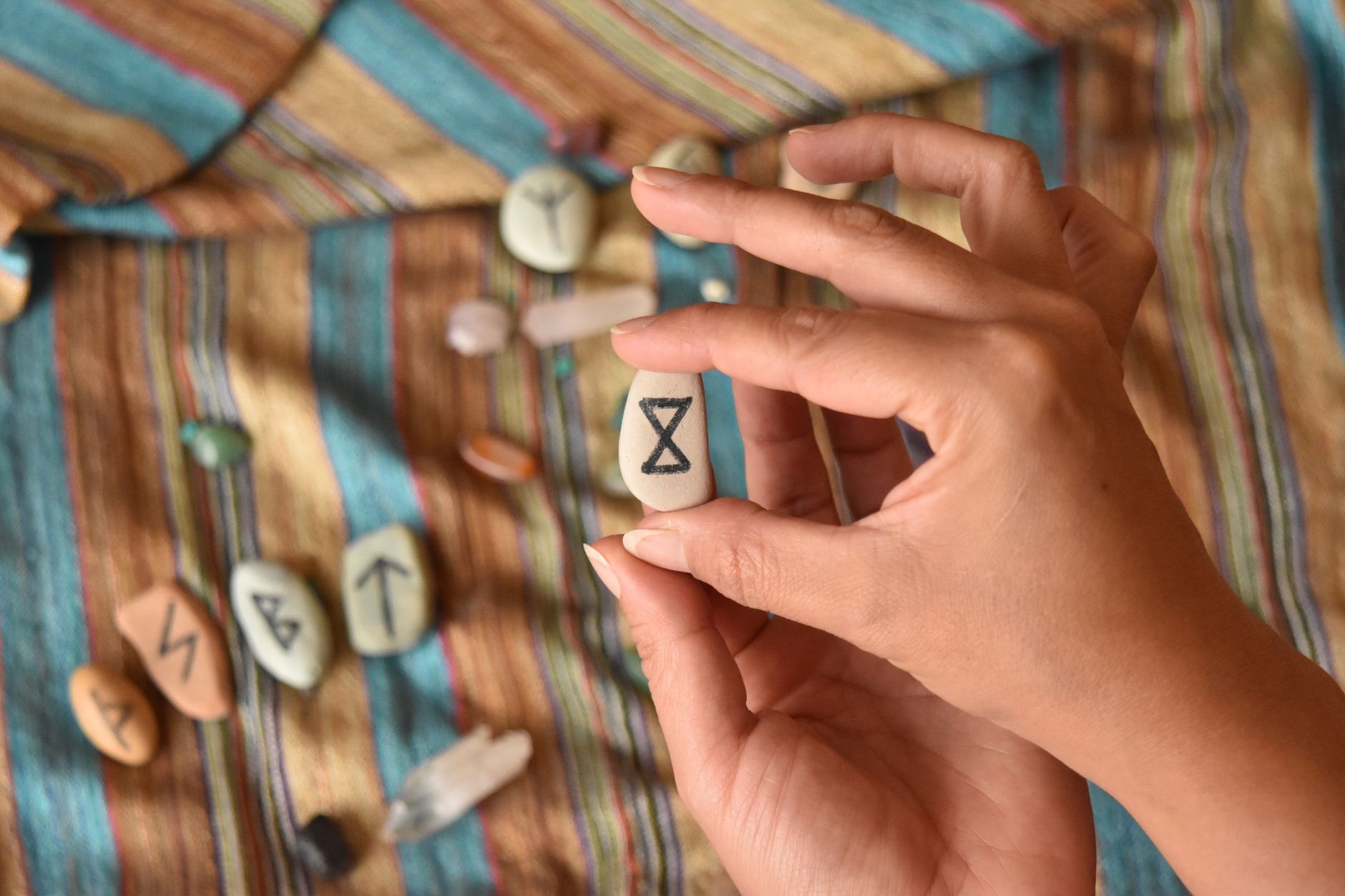
If you’ve ever opened a rune set and found a blank stone, you might have wondered: is this an ancient mystery or a modern invention? The answer might surprise you—the blank rune, often called Odin’s Rune, has no historical precedent in the Elder Futhark. It was introduced by Ralph Blum in his 1982 book The Book of Runes, a decision that sparked debate among rune workers for decades. Yet today, many practitioners embrace it as a symbol of the unknowable, a nod to the Norse concept of wyrd—the web of fate that weaves threads we cannot see. I remember the first time I drew that blank stone from my pouch, a hand-carved set I’d bought from a local artisan at a pagan festival. The air smelled of woodsmoke and rain, and the candlelight flickered across the smooth surface. I sat with it for a full ten minutes, letting the silence teach me what the stone could not say. That moment changed how I approach rune work: it’s not just about memorising meanings, but about listening to what the runes reveal through absence. In this guide, I’ll walk you through the full list of 24 Elder Futhark rune meanings—plus the optional blank rune—drawing on traditional lore, practical correspondences, and the kind of grounded intuition you develop after years of casting stones under the moon.
The Elder Futhark: A Living Alphabet of 24 Signs
The Elder Futhark is the oldest known runic alphabet, used by Germanic tribes from roughly 150 to 800 CE. Its name comes from the first six runes: Fehu, Uruz, Thurisaz, Ansuz, Raidho, and Kenaz—forming the word “Futhark.” Unlike modern alphabets, each rune is both a letter and a symbol carrying deep magical and divinatory meaning. The 24 runes are divided into three groups of eight called aetts (or ættir), each associated with a Norse deity and a thematic focus. The first aett belongs to Freyr and Freyja, governing wealth, creation, and earthly cycles. The second aett is tied to Heimdall and Mordgud, dealing with challenges, protection, and the threshold between worlds. The third aett falls under Tyr and Odin, representing justice, ancestral wisdom, and the soul’s journey. When I teach beginners, I always start by asking them to hold each stone and feel its weight—not just in your hand, but in your chest. The runes aren’t dead symbols on a chart; they are keys that unlock layers of meaning when you work with them under specific moon phases. For example, casting runes during the new moon amplifies new beginnings, while the full moon clarifies hidden truths. I recommend timing your first deep study of the aetts to the waxing moon, starting on a Wednesday—Odin’s day—for enhanced communication with the runes.
First Aett: Fehu Through Wunjo – Wealth, Strength, and Joy
The first aett lays the foundation for material and spiritual abundance. Fehu (ᚠ) means “cattle” or “mobile wealth”—think of gold coins, a steady income, or the energy of something you can move and trade. Its number is 1, and its colour is deep red, like the blood of sacrifice that nourishes the land. Uruz (ᚢ) is the aurochs, an extinct wild ox symbolising raw, untamed strength. When Uruz appears in a reading, I tell my clients to stand tall, breathe into their bellies, and remember they are made of the same earth as the ancient beasts. Thurisaz (ᚦ) is the thorn or giant—a rune of protection and conflict. It’s not comfortable, but it clears the way. Ansuz (ᚨ) is Odin’s rune, representing divine communication, poetry, and the breath of life. Raidho (ᚱ) is the wagon, journey, and cosmic order—perfect for planning travel or a major life transition. Kenaz (ᚲ) is the torch, fire, and creative illumination. I once cast Kenaz during a waning moon while working on a novel, and the words poured out like molten gold. Gebo (ᚷ) is the gift, often a partnership or sacrifice. Wunjo (ᚹ) is joy—not fleeting happiness, but the deep satisfaction of alignment. Each of these runes has a corresponding tree, gemstone, and deity. For instance, Fehu aligns with the elder tree and amber, while Wunjo resonates with the ash tree and citrine. When you pull one of these runes, consider the moon phase: Fehu during a waxing moon suggests financial growth; during a waning moon, it may warn of loss. Write your interpretations in a journal, noting the date, moon phase, and your emotional state.
Second Aett: Hagalaz Through Sowilo – Challenge, Cycle, and Victory
The second aett dives into the darker, transformative currents of existence. Hagalaz (ᚺ) is hail—a disruptive force that breaks down what no longer serves. I’ve drawn this rune during storms, both literal and metaphorical, and it always brings a strange relief, like the crack of lightning before rain. Nauthiz (ᚾ) is need, constraint, and the fire that kindles self-reliance. Isa (ᛁ) is ice, stillness, and the patience of a frozen lake. When Isa appears, stop. Do not force action. Jera (ᛃ) is the harvest cycle, a rune of reward after effort. Eihwaz (ᛇ) is the yew tree, symbolising death and rebirth—one of the most powerful runes for shadow work during the dark moon. Perthro (ᛈ) is the dice cup or fate—mystery, luck, and the unknown. Algiz (ᛉ) is the elk or protective sedge, a shield against harm. Sowilo (ᛋ) is the sun—victory, vitality, and clarity. These eight runes are particularly potent when worked with during the waning moon or the dark moon, as they deal with letting go, enduring, and emerging stronger. I recommend creating a simple ritual: light a black candle for Hagalaz, a white one for Sowilo, and place the runes in a circle around a bowl of moon water charged under the waning moon. Meditate on the space between destruction and renewal. The second aett teaches us that every storm has a purpose—and that the sun always returns.
Third Aett: Tiwaz Through Othala – Justice, Growth, and Legacy
The third aett brings us into the realm of law, ancestry, and spiritual completion. Tiwaz (ᛏ) is the rune of Tyr, the god of justice and sacrifice. It represents honour, leadership, and the courage to make hard choices. Berkano (ᛒ) is the birch goddess, fertility, and new beginnings—especially potent during the waxing moon. Ehwaz (ᛖ) is the horse, partnership, and trust—often appearing when you need to rely on another person or a spiritual ally. Mannaz (ᛗ) is humanity, the self, and community. When Mannaz appears, I ask: are you seeing yourself clearly, or through the eyes of others? Laguz (ᛚ) is water, flow, and the unconscious—a rune for dreamwork and intuitive development. Ingwaz (ᛝ) is the god Ing, fertility, and the seed waiting to sprout. Dagaz (ᛞ) is daybreak, breakthrough, and the turning point. Othala (ᛟ) is ancestral property, heritage, and the home. I always keep a set of runes on my ancestor altar, especially during Samhain, and Othala is the stone I hold when I speak their names. The third aett works beautifully during the full moon, especially on a Thursday (Thor’s day) for protection of legacy. To deepen your connection, try casting all eight runes of the third aett on a piece of black cloth under a full moon, then journal about which one calls to you first. That rune often holds the key to your next step in spiritual maturity.
The Blank Rune: Odin’s Rune – Mystery and the Unknowable
The blank rune, sometimes called Odin’s Rune or the Wyrd stone, is a modern addition that many traditionalists reject. Yet I’ve found it invaluable when used with intention. Unlike the 24 runes of the Elder Futhark, the blank stone has no fixed meaning—it represents that which is not meant to be known yet, the threads of fate too tangled for human eyes. In my practice, I only include the blank rune in a set if I’m doing a reading for someone who is struggling with certainty, as a reminder that some answers require patience. I charge the blank rune under the dark moon, placing it on a bed of black tourmaline and selenite, and I ask Odin for the wisdom to accept mystery. If you choose to use a blank rune, be clear about its role: it is not a “wild card” or a “free space.” It is a sacred pause. I’ve seen too many beginners treat it as a negative omen, but it’s closer to a blank page in a grimoire—waiting for the right moment to be filled. Consider pairing it with the rune Perthro, which also governs fate, to create a dialogue between what is hidden and what is revealed. For your first set, I suggest buying one that includes the blank rune so you can decide for yourself whether it speaks to you. The Two Wander x Elysium Rituals rune set includes a beautifully polished blank stone with a gold-flecked surface, and their guidebook offers a poetic interpretation that honours both tradition and personal intuition.
How to Cast and Read Runes – Timing, Tools, and Technique
Rune casting is an intimate practice, not a parlor trick. I always begin by grounding: three deep breaths, a hand on my heart, and a silent request to the runes to speak truth. You’ll need a rune pouch (velvet or linen works best), a casting cloth (preferably a natural fibre like cotton or silk), and a quiet space where you won’t be interrupted. The most traditional method is the “three-rune draw”: one for the past, one for the present, one for the future. But I also love the “nine-rune spread” where you cast all stones onto the cloth and read the ones that land face-up in relation to each other. Timing matters. For divination, the new moon is ideal for questions about beginnings, the full moon for clarity, and the waning moon for releasing. Wednesday (Odin’s day) is the strongest day for rune readings, while Saturday (Saturn’s day) is good for karmic questions. Always cleanse your runes before a reading—pass them through incense smoke (frankincense or sandalwood), or place them on a selenite plate under the moonlight for an hour. I once did a reading for a friend during a lunar eclipse, and the runes showed such raw truth that we both wept. That’s the power of this practice: it strips away pretense. If you’re new, start with one rune a day. Pull it at dawn, journal its meaning, and watch how it manifests in your day. After a month, you’ll have a personal relationship with each symbol that no book can replace.
Charging and Cleansing Your Runes – Moon Phases, Elements, and Intention
Your runes are energetic tools that absorb your intentions—and the energies around you. I cleanse my set at least once a month, ideally during the dark moon when the veil is thin. To cleanse, hold each stone under cool running water (if they’re water-safe—check for porous stones like selenite), then pass them through the smoke of a cleansing herb like sage, cedar, or rosemary. For a deeper cleanse, bury them in a bowl of sea salt for 24 hours, then rinse. Charging is where the magic deepens. I charge my runes under specific moon phases depending on their purpose: new moon for new beginnings, waxing moon for growth, full moon for power, waning moon for banishing. Lay them on a windowsill that catches the
Related from our network
- Valkyrie Names Meanings Complete: 9 Choosers of the Slain in Norse Texts (mythicalarchives)
- 101 Most Common Dream Meanings And Symbol Interpretations (thedreamfiles)
- The Ultimate Guide to Ai Climate Change Solutions in 2025 (clearainews)
Join The Mystic Circle
Weekly spells, moon rituals & magickal wisdom — plus a free ritual planner.

🌙 Get a Free AI Tarot Reading
Luna reads the cards just for you — powered by AI, guided by the moon. No account needed.
Draw Your Cards Now ✨Powered by Luna's Circle — AI Spiritual Guidance
Your Free Moon Ritual Calendar
24 rituals for every new and full moon of 2026, plus sabbat celebrations, moon water guide, and monthly correspondences.
Get the Moon CalendarAlso: Free Spellbook