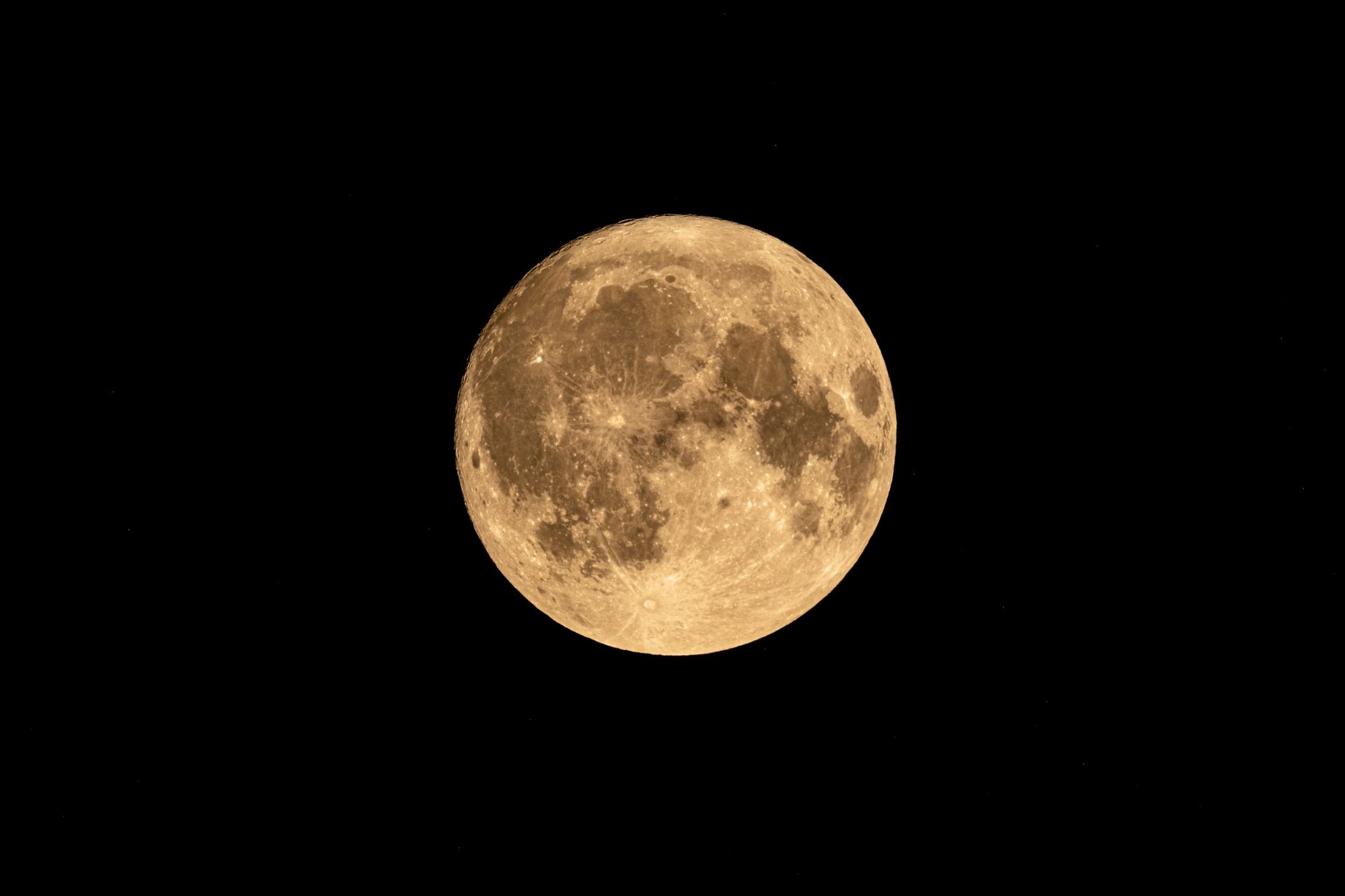
I once cleared my altar for what I thought would be an ordinary Full Moon in Virgo, laid out my usual rose quartz and lavender, and lit a single white candle the way I’d done a hundred times before. Forty minutes later, sitting in the dark as the Moon slid into Earth’s umbra and turned the color of dried blood, I understood I’d made a mistake. That March 2025 eclipse didn’t want gentle affirmations about self-care. It wanted me to name the thing I’d been avoiding for three years. I did, out loud, alone in my kitchen at 2:59 a.m. EDT — the exact moment of maximum eclipse — and something in my chest actually cracked open. A standard Full Moon ritual would have let me float past that moment untouched. This is why eclipse magic needs its own rulebook, and why treating it like “Full Moon, but stronger” is the single most common mistake practitioners make.
In This Article
- What’s Actually Happening Up There: The Astronomical Mechanics
- Why the Standard Full Moon Playbook Breaks Down Here
- The Shadow Work Nobody Warns You About
- Timing and the Void-of-Course Warning
- Ritual Actions Built Specifically for Eclipse Nights
- Crystals and Herbs for Eclipse Magic
- Journal Prompts for the Eclipse Portal
- Building Your Eclipse Altar
- Three Concrete Steps Before Your Next Eclipse
Key Takeaways
- What’s Actually Happening Up There: The Astronomical Mechanics
- Why the Standard Full Moon Playbook Breaks Down Here
- The Shadow Work Nobody Warns You About
- Timing and the Void-of-Course Warning
What’s Actually Happening Up There: The Astronomical Mechanics
A lunar eclipse only occurs at a Full Moon, but not every Full Moon is an eclipse — the Moon’s orbit is tilted about 5.1 degrees relative to Earth’s, so most months it passes above or below our planet’s shadow entirely. An eclipse happens only when the Full Moon sits within roughly 11 to 12 degrees of a lunar node, the point where its orbital path crosses the ecliptic. During a total lunar eclipse, the Moon passes fully through Earth’s umbra, the darkest inner cone of shadow, and can dim from -12.7 magnitude (typical Full Moon brightness) down to around -2 or -3 magnitude at totality — a light drop of roughly 10,000 times.
10 min read
Take the total lunar eclipse of March 13-14, 2025, visible across the Americas, as a working example. Penumbral shadow contact began at 11:57 p.m. EDT, partial eclipse (umbral contact) started at 1:09 a.m., totality ran from 2:26 to 3:31 a.m. with maximum eclipse at 2:59 a.m. EDT, and the whole event carried an eclipse magnitude of 1.178, meaning the Moon passed comfortably through the umbra’s center rather than skimming its edge. That Full Moon fell at 23 degrees Virgo. Compare that to the September 7-8, 2025 total lunar eclipse — visible from Europe, Africa, Asia, and Australia — where totality lasted 82 minutes (17:30 to 18:52 UTC) with the Moon at 15 degrees Pisces. Same phenomenon, wildly different duration and zodiacal flavor. Always check exact contact times for your longitude on timeanddate.com or an astronomical almanac before you plan a ritual window; a fifteen-minute miscalculation means you’re lighting candles for an empty sky.
The Saros cycle governs the rhythm of all this: eclipses repeat in nearly identical geometric patterns every 18 years, 11 days, and 8 hours. Lunar eclipses arrive in pairs or trios during “eclipse seasons” that occur roughly twice a year, about six months apart, because that’s how long it takes the Sun to align with the nodal axis again. Knowing this rhythm matters for ritual planning — you’re not chasing a rare cosmic accident, you’re syncing with a cycle older than written history.
Knowing this rhythm matters for ritual planning — you’re not chasing a rare cosmic accident, you’re syncing with a cycle older than written history.
Why the Standard Full Moon Playbook Breaks Down Here
A typical Full Moon ritual is built on culmination energy — the Moon at 100% illumination, radiating outward, perfect for release spells, gratitude work, and charging crystals under open moonlight for 4 to 8 hours. That model assumes uninterrupted light. An eclipse removes the light. You’re not working with illumination anymore; you’re working with occlusion, and that changes the entire spellcraft logic.
Here’s where most beginner guides get it wrong: they suggest doubling your usual Full Moon spell “because eclipses are more powerful.” Power isn’t the variable that shifts — direction is. A Full Moon ritual says “release what no longer serves me and trust the tide to carry it out.” An eclipse ritual says “something is going to change whether you consent to it or not, so choose your position deliberately.” I’ve seen practitioners try gentle manifestation work during totality and come away frustrated, wondering why nothing landed. The eclipse wasn’t ignoring them. It was simply not built for that kind of spell.
- Full Moon: gradual culmination, predictable timing, safe for beginners, ideal for gratitude and release work.
- Lunar Eclipse: sudden, non-negotiable shift, tied to karmic/nodal themes, better suited to shadow work and threshold rituals than manifestation.
- Full Moon: charge crystals in open moonlight for hours without concern.
- Lunar Eclipse: many practitioners, myself included, avoid charging crystals meant for gentle, everyday use during totality — the energy imprints as intense and can feel destabilizing in daily wear.
- Full Moon: void-of-course windows are usually brief and low-stakes.
- Lunar Eclipse: the Moon is frequently void-of-course for several hours around the event itself, which changes when you should actually speak your intention aloud.
The Shadow Work Nobody Warns You About
Lunar eclipses sit at the lunar nodes — the same points astrologers call the axis of destiny, the line between where you’ve been and where you’re being pulled. In Western witchcraft, this maps neatly onto shadow work: the eclipse doesn’t create your unresolved material, it just refuses to let you keep it hidden. During totality, the Moon’s light is blocked by Earth’s own shadow, a strikingly literal metaphor for the self obscuring itself. I don’t think that’s coincidence; I think it’s why cultures across centuries independently treated eclipses as thresholds rather than celebrations.
This is the part standard Full Moon guides skip entirely because it’s uncomfortable content to package. A Full Moon ritual invites you to release. An eclipse ritual demands you look directly at the thing you’d rather release without examining. In my experience, the difference shows up physically — clients and coven-mates report vivid dreams for 3 to 5 nights surrounding an eclipse, unexpected tears during ritual, or sudden clarity about a relationship or job they’d been avoiding a decision on. None of that is dramatic exaggeration; it’s the documented pattern astrologers have tracked around eclipse dates for generations, sometimes called the “eclipse effect” for events unfolding within a 6-month window on either side.
The zodiac sign hosting the eclipse colors the specific shadow material that surfaces. A Virgo eclipse (March 2025) tends to expose where perfectionism or health anxiety has been used as a control mechanism. A Pisces eclipse (September 2025) dissolves boundaries around grief, addiction patterns, or spiritual escapism. Track which sign your eclipse falls in and let that inform your journal prompts rather than working from a generic script.
Track which sign your eclipse falls in and let that inform your journal prompts rather than working from a generic script.
Timing and the Void-of-Course Warning
Void-of-course describes the period after the Moon makes its last major aspect in a sign before it moves into the next one — traditionally considered a poor window for launching new spells because “nothing comes to fruition.” Around eclipses, this window often runs longer than usual and frequently overlaps with the eclipse itself, which means the moment of maximum shadow may not be the moment to speak your working aloud.
For the March 2025 eclipse, the Moon in Virgo went void-of-course at 3:44 a.m. EDT, roughly 45 minutes after maximum totality and before the Moon fully exited the umbra. My practice: I speak eclipse intentions during totality itself, before any void-of-course window begins, and I close the ritual completely — snuffed candles, journal closed, altar cleared — before that void period starts. If you’re working with an eclipse where the void-of-course window falls before totality, flip the order: do your grounding and cord-cutting work first, then hold silent, receptive space through the peak rather than actively casting.
Always check void-of-course times against an ephemeris for your specific eclipse date — Astro-Charts.com and the classic “Llewellyn’s Astrological Calendar” both list these accurately. Skipping this step is the single most common reason practitioners feel their eclipse ritual “did nothing.”
Ritual Actions Built Specifically for Eclipse Nights
The Threshold Working (for total lunar eclipses)
- Begin 20 minutes before partial eclipse contact. Ground with three slow breaths, feet flat on the floor or earth.
- Light one black candle (for the shadow being revealed) and one silver candle (for the light being obscured) — not white. White implies purity; this work isn’t about purity, it’s about integration.
- At the moment of totality, name the change you sense is already underway — not what you wish for, but what you already feel shifting. Speak it once, plainly, no embellishment.
- Hold silence through peak totality. Resist the urge to fill the space with more words.
- As the Moon begins exiting the umbra, extinguish the black candle first, then the silver. Let the silver burn down naturally if possible.
Cord-Cutting for Partial Eclipses
Partial eclipses, where the Moon only partly enters the umbra, suit smaller-scale releasing work rather than full threshold rituals. Write the attachment you’re severing on a strip of unbleached cotton or paper, tie it with red thread, and cut it with a blade you reserve only for eclipse work — I use a small letter-opener kept wrapped in black silk the rest of the year, and I’ve done this same cut at every partial eclipse since 2019. Burn the paper in a fireproof dish during the partial phase, not before contact begins and not after it ends.
Burn the paper in a fireproof dish during the partial phase, not before contact begins and not after it ends.
Crystals and Herbs for Eclipse Magic
Skip your usual selenite-under-open-moonlight charging routine here — selenite (hydrous calcium sulfate) absorbs ambient light-based energy beautifully for a standard Full Moon, but eclipse energy is occlusive, not radiant, so it imprints differently and can leave the stone feeling “heavy” rather than clear. Instead, reach for stones associated with shadow integration and grounding through disruption.
- Black moonstone — echoes the eclipse’s own darkened light; place on the altar, not worn, during totality.
- Labradorite — for perceiving what the shadow reveals without being overwhelmed by it; hold during the naming step of the Threshold Working.
- Smoky quartz — grounds the sudden-change energy; keep one in your pocket for 24 hours after the eclipse closes.
- Obsidian — for the cord-cutting ritual specifically; its volcanic origin (rapid cooling of lava) mirrors sudden transformation.
For herbs, burn Artemisia vulgaris (mugwort) for psychic opening rather than the usual jasmine or rose you’d reach for at a Full Moon — mugwort has a centuries-long association with dream and vision work in European folk practice, and eclipse nights amplify dream residue for days afterward. Pair it with a pinch of Salvia officinalis (garden sage, not the endangered white sage) for grounding smoke after the ritual closes, and keep Valeriana officinalis (valerian root) tea on hand — eclipse nights disrupt sleep more than typical Full Moons, and I say that from four separate eclipse nights of restless 3 a.m. wakefulness.
Journal Prompts for the Eclipse Portal
Standard Full Moon journal prompts ask what you’re grateful for or ready to release. Eclipse prompts need to go further into the nodal, threshold quality of the event. Use these within 24 hours before and 72 hours after the eclipse — the effect window astrologers track:
- What change have I sensed coming that I’ve been pretending not to notice?
- If this eclipse forced one decision for me tonight, what would it be?
- What part of my identity am I using as a shield against a truth I already know?
- Where in my life am I confusing “safe” with “stagnant”?
- What dream or image surfaced in the three nights around this eclipse, and what does it want from me?
Building Your Eclipse Altar
Set your altar in a north-facing corner if possible — a small nod to the directional correspondence many traditions give to shadow and mystery work, though south-facing works fine if that’s your only option; don’t let directional purism stall the ritual. Layer black or deep indigo cloth as your base instead of the white or silver you’d use for a standard Full Moon. Center the black and silver candles from the Threshold Working, flank them with your chosen crystals, and add a small bowl of still water rather than moon water charged in advance — you want water that hasn’t been exposed to light at all before the ritual, so it can absorb the eclipse’s occlusive quality directly.
Skip the usual full display of fresh flowers; a single dried stem of mugwort or a sprig of rosemary (Rosmarinus officinalis, for memory and threshold-crossing) is more fitting than an abundant bouquet. This isn’t a celebration altar. It’s a witnessing altar, and it should feel spare enough that nothing distracts from the moment of totality itself.
Three Concrete Steps Before Your Next Eclipse
Find your next lunar eclipse date and exact contact times for your longitude — bookmark timeanddate.com’s eclipse calculator rather than relying on generic “eclipse in March” posts. Build your altar the night before, not the day of, so you’re not rushing while the umbra is already approaching. And commit to one Threshold Working or cord-cutting ritual matched to whether your eclipse is total or partial, rather than reaching for your default Full Moon script out of habit. The next total lunar eclipse visible widely across the Americas falls on March 3, 2026 — mark it now, and give yourself the full 20-minute pre-totality window to prepare properly.
Do I need to see the eclipse to work with its energy?
No. The eclipse’s energetic effect isn’t dependent on visibility from your location — it’s a real astronomical event happening to the Moon regardless of cloud cover or daylight hours where you live. I’ve done full Threshold Workings during eclipses that were only visible from the other side of the planet, using exact UTC contact times converted to my local clock. The ritual still landed; I just worked from timing data instead of a visible shadow crossing the disk.
Is it dangerous to do spellwork during a lunar eclipse?
Not dangerous, but it demands more emotional readiness than a standard Full Moon ritual. The main risk is psychological rather than magical: surfacing shadow material without grounding support afterward can leave you raw for a day or two. Always pair eclipse work with aftercare — grounding herbs, extra sleep, and a follow-up journal entry 72 hours later to track what actually shifted.
How is a lunar eclipse different from a supermoon or blood moon?
A “supermoon” refers to a Full or New Moon occurring near perigee, when the Moon is closest to Earth, making it appear up to 14% larger and 30% brighter — it’s a distance phenomenon, not a shadow phenomenon. A “blood moon” is simply the reddish color the Moon takes during totality, caused by sunlight refracting through Earth’s atmosphere (the same Rayleigh scattering that makes sunsets red) as it filters into the umbra. They can overlap with a total lunar eclipse but describe entirely different mechanics, and neither one alone carries the occlusive, shadow-work quality specific to the eclipse itself.
Deepen your practice, one ritual at a time
Join our circle for seasonal rituals, moon guides, and gentle prompts — sent with intention, never spam.
Sources & further reading
- Witchcraft (en.wikipedia.org)
- Science from the Moon: The NASA/NLSI Lunar University Network for Astrophysics Research (LUNAR) (arxiv.org)
